
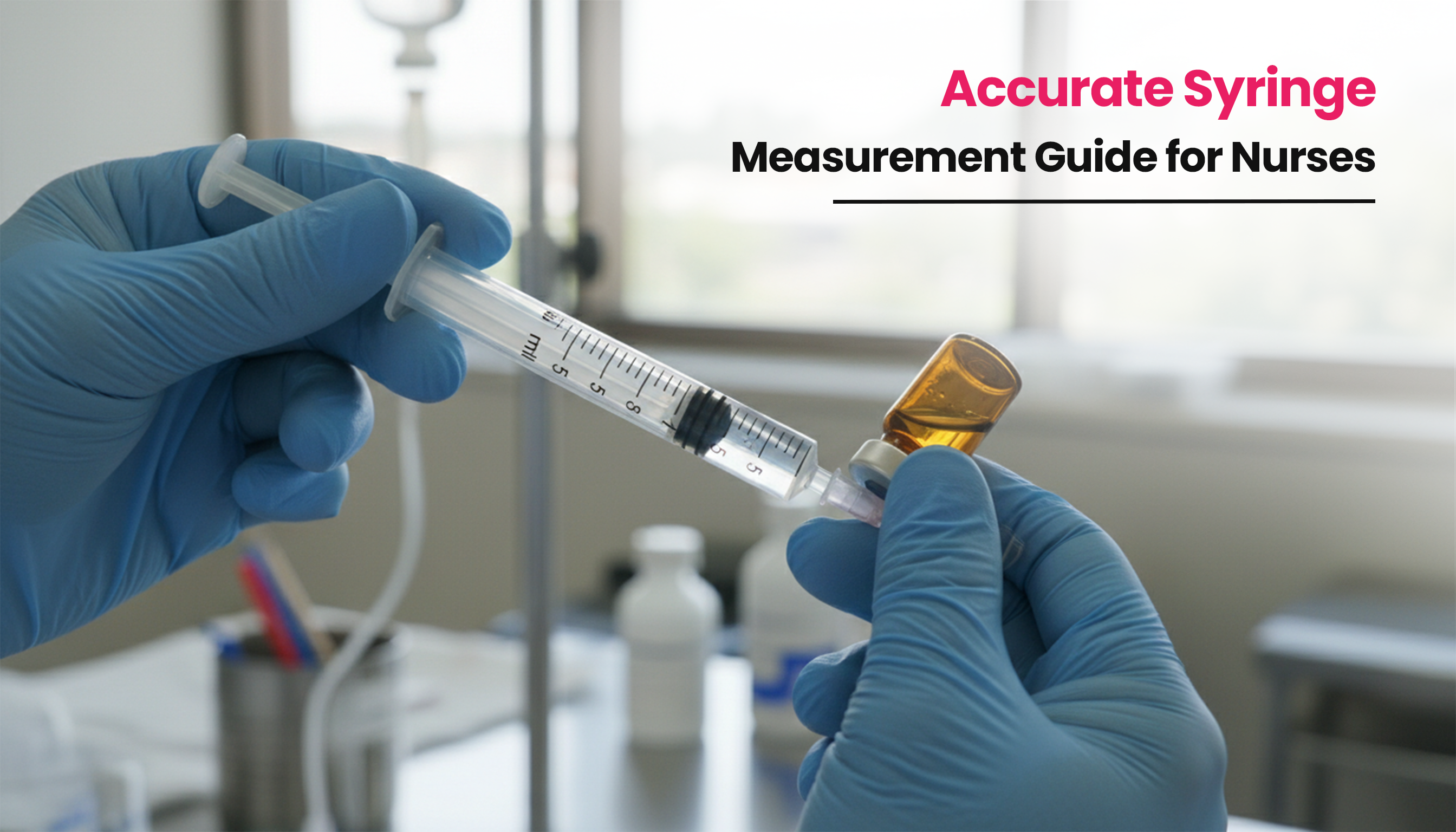
Syringe measurements can sometimes confuse nurses, and getting the syringe measurements wrong can put the patients and your nursing license at risk. These syringe mistakes occur not because nurses are careless but because sometimes reading syringes can be confusing; therefore, it is important for nurses to know how to read syringes correctly because it directly impacts patient safety.
Before we dive into this topic, if you are a nurse with 2 plus years of experience or a seasoned travel nurse, then join SkillGigs and become a travel nurse with us, where you will find top high-paying travel nursing assignments. Explore travel nursing jobs now!
Why is it important to read syringes correctly?
One of the most common mistakes that nurses make is medication errors, and the leading cause is misreading the syringes. Whether you are a new nurse, experienced nurse, or travel nurse to is important to know how to read syringes correctly. It is important because:
- Many medications require precise dosing, and not administering them correctly can cause serious complications in patients.
- Not all syringes measure the same way, and misreading the scale can result in a dosing error.
- Correct syringe reading helps nurses stay legally protected.
- Reading an accurate syringe is important for high-risk populations, e.g., pediatrics, neonates, and critically ill patients.
How to read syringes correctly?
Before we dive into how to read syringes accurately, it is essential to understand the different types and parts of syringes.
Syringe Anatomy: Parts of the Syringe
Here are the different parts of a syringe:
Barrel: It is the clear plastic cylinder part of the syringe with measurement markings that hold the medication.
Plunger: It is the long rod that moves inside the syringe to push medication out of the syringe.
Rubber stopper: Tip of the plunger close to the needle, which is the true reading point.
Graduation lines: These are the measurements markings on the barrel of the syringe that indicate volume (mL) or units (insulin syringe)
Tip (Luer lock/ Luer slip): Attaches the needle or IV tubing (Luer lock used for IV medications and Luer slip common for IM, subcutaneous, or oral meds)
Syringe sizes
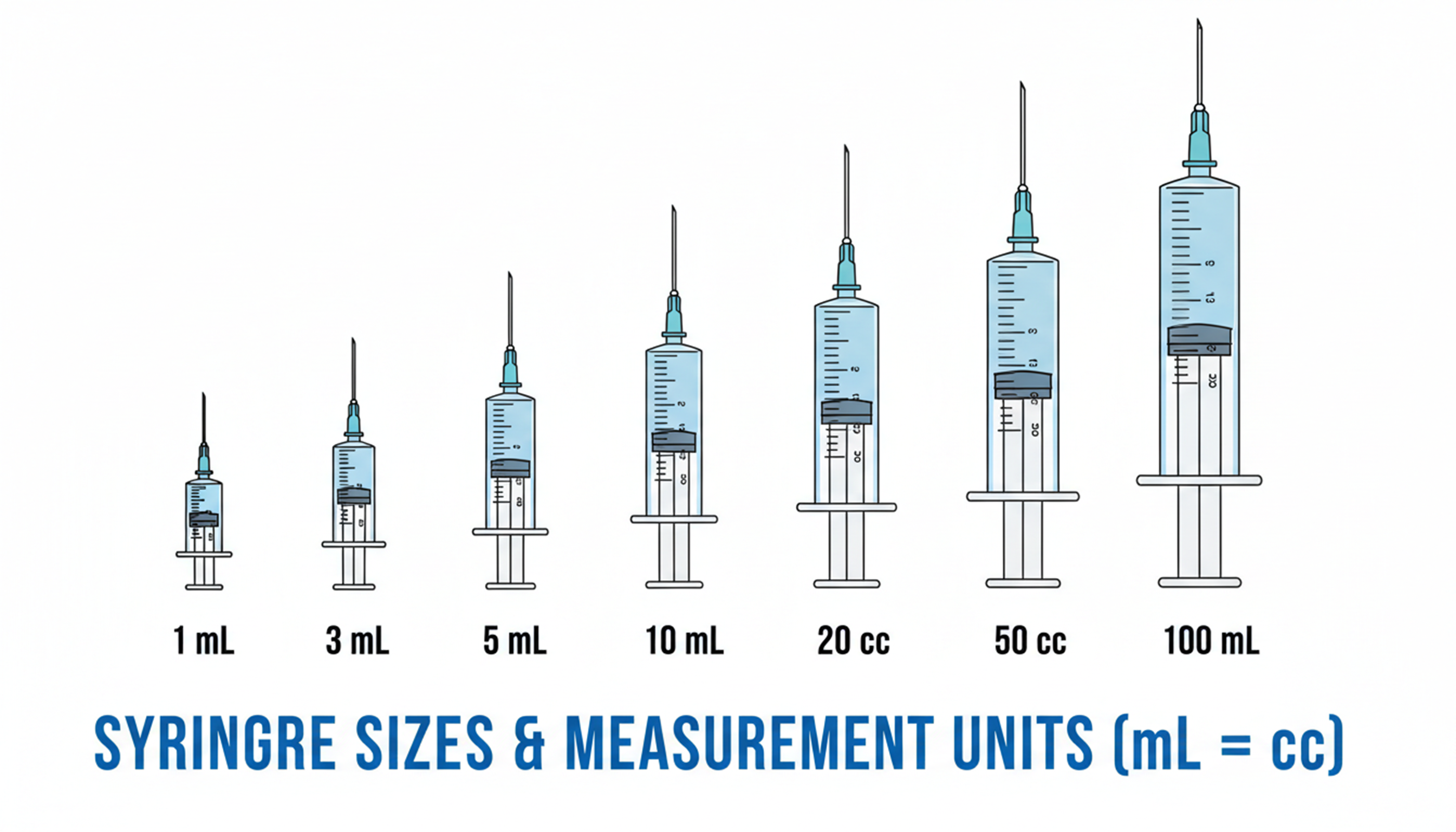
It is important for nurses to choose the right size syringe for administering medications. Here are some commonly used syringe sizes that are used by nurses:
1 mL Syringe (tuberculin): Commonly used for small, precise doses such as measuring 0.01 mL increments, which is important when administering tiny amounts of medication
3 mL Syringe: This syringe is commonly used for intramuscular (IM) and subcutaneous (SC) injections. It measures 0.1mL increments, providing reliable accuracy for standard doses such as vaccines to routine injections, etc. It is commonly used for adult medication administration.
5 mL Syringe: This syringe is designed to administer a larger volume of medication, typically more than 3mL. It is ideal for IV medications.
10 mL Syringe: This syringe is ideal for saline flushes, administering IV medications and mixing medications or solutions.
Insulin Syringe: This is only used for insulin, and it measures in units rather than in milliliters. Typically comes in 30, 50, and 100-unit sizes, which allow precise dosing.
How to read a 1 mL syringe (Tuberculin Syringe)?
In a 1 ml syringe, each line measures 0.01 increments.
Long lines: 0.05 ml, 0.1ml, 0.2 ml
Short lines: 0.01ml,0.02ml,0.03ml
Example:
If the order is for 0.07ml, then identify 0.05ml and count 2 short lines (0.01+0.01=0.02ml).
0.05ml+0.02ml=0.07ml
How to read a 3ml syringe?
In a 3ml syringe, each line measures 0.1 increments.
Long lines: 0.5ml, 1ml, 1.5 ml
Short lines: 0.1ml, 0.2ml, 0.3 ml
Example:
If the order is 1.3 ml, then go to 1ml long line and add 3 short lines (0.1+0.1+0.1=0.3ml)
1ml+0.3ml=1.3ml
How to read a 5ml syringe?
In a 5ml syringe, each line measures 0.2 increments.
Long lines: 1ml, 2ml,3ml
Short lines: 0.2ml,0.4ml,0.6ml
Example:
If the order is 2.4 ml, then count 2ml long lines and add 2 short lines (0.2+0.2=0.4ml)
2+0.4=2.4ml
How to read a 10 ml syringe?
In a 10 ml syringe, it measures in 0.5 increments.
Long lines: 1ml, 2ml, 3ml
Short lines: 0.5ml,1.5ml,2.5ml
Example:
If the order is 3.5 ml, then count 3 ml long lines and add 1 short line (0.5ml)
3+0.5=3.5ml.
How to read an insulin syringe?
It is important to know that insulin syringes are measured in units and not in mL, and come in 30, 50, and 100 units. Lines represent 2 units of insulin.
How to measure 0.25 ml in a 1 ml syringe?
Long lines are 0.1 ml, and short lines between are 0.01 ml each. To measure 0.25 ml, locate 0.2 ml and then count 5 small lines (0.01+0.01+0.01+0.01+0.01=0.05ml)
0.2+0.05=0.25ml
What are the tips and tricks to read a syringe correctly and accurately?
- Hold the syringe at eye level and read the top of the plunger stopper, not the bottom.
- Always remove air bubbles before administering medications with a syringe.
- Always double-check the high alert medications to be extra safe.
- Use the smallest syringe size possible.
- Don’t confuse units with ml. Never guess, always count the doses.
What are the 5 rights of medication administration?
The five medication administration rights are:
- Right patient
- Right medication
- Right dose
- Right route
- Right time
How many units are in 1 ml of insulin?
In an insulin syringe, 1 unit = 0.01 ml.
Where do nurses read a syringe?
It should be read at the top of the rubber stopper and not the bottom.
What syringe should be used for insulin?
Only an insulin syringe should be used for insulin intake.
Which insulin is best for small doses?
The 1 ml syringe (tuberculin) is best for small doses.
Conclusion
Reading the syringes correctly is a critical skill that every nurse should know. Choosing the correct syringe, understanding markings, and reading them precisely will enable nurses to safely administer medications to patients and protect their professional practice. Whether you are a new nurse, an experienced nurse, or a travel nurse, you should master how to read a syringe correctly.
Before you go, explore high-paying travel nursing jobs on SkillGigs and make more money. Download our app and start bidding on your dream jobs.