

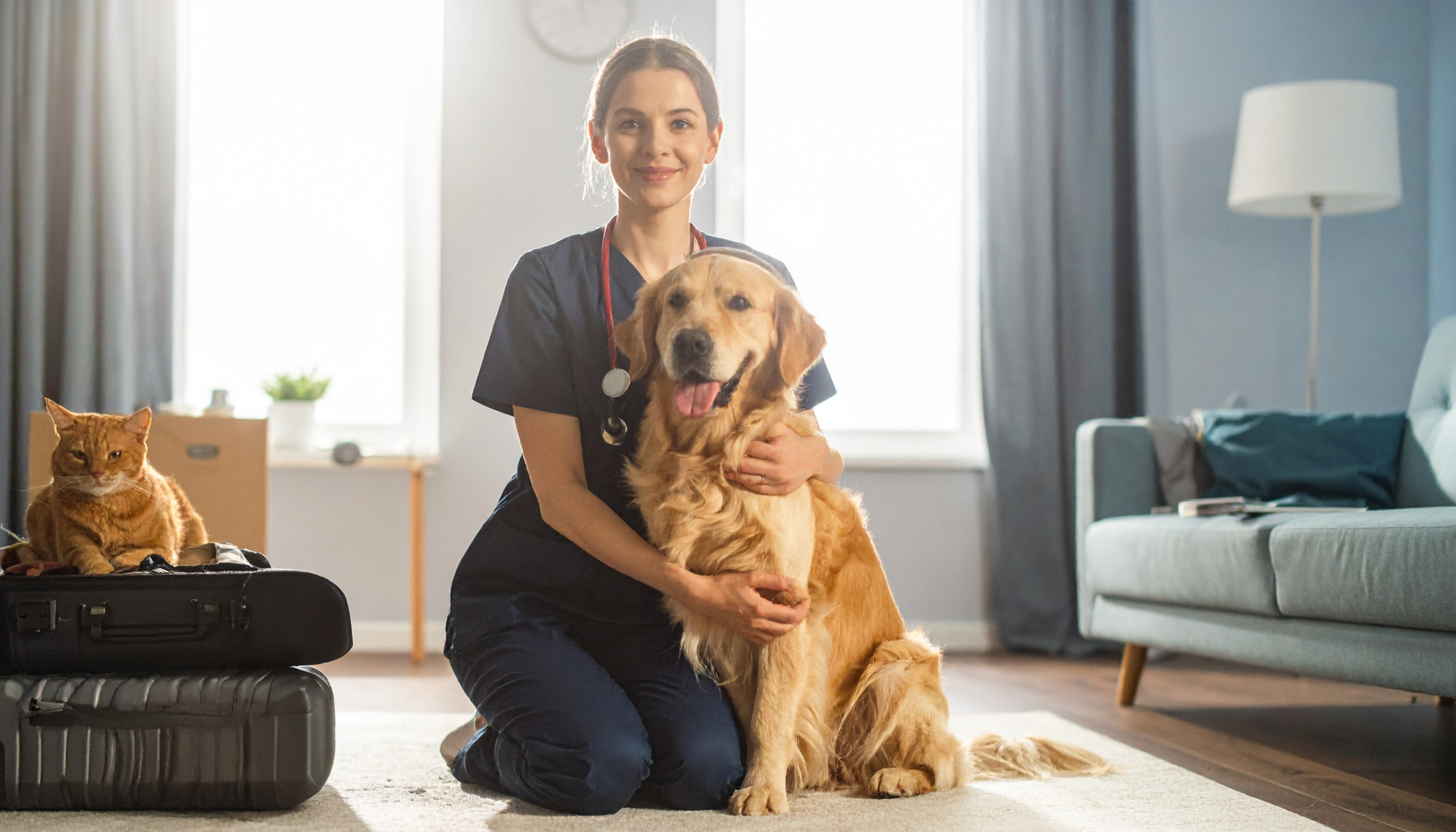
Yes, travel nurses can bring their pets along with them on assignments. It’s becoming increasingly common in the US, but the entire process of travel nursing with pets needs careful preparation and planning to avoid costly mistakes.
By the end of this blog, you’ll know everything there is to know about bringing pets on travel nursing assignments.
How to Do Travel Nursing with a Dog
Here are some of the most important things to keep in mind when traveling with your dog.
Find Dog-Friendly Housing
Finding pet-friendly housing is one of the biggest challenges for travel nurses. Before booking, always verify these critical details:
- Breed Restrictions: Many rentals ban specific dog breeds.
- Pet Fees & Policies: Check for non-refundable deposits or monthly “pet rent.”
- Pet Limits: Confirm the maximum number of animals allowed.
- Weight Limits: Ensure your pet falls under their maximum weight limit.
- Local Amenities: Look for nearby parks, vets, and pet-friendly green spaces.
Consider Your Dog Breed
Each dog breed requires a different handling approach. For example, high-energy dogs like huskies and Australian shepherds need lots of exercise and mental stimulation to stay happy on the road. Whereas, brachycephalic breeds such as pugs and bulldogs could get uncomfortable during air travel because of respiratory and breathing concerns.
Size matters too. Big dogs naturally require more physical space and are harder to transport compared to small dogs like Chihuahuas or Yorkies.
Finally, keep your pet’s temperament in mind (you know your dog best!). Anxious breeds and rescue dogs usually struggle with constant moves and need more time to get used to new environments.
Keep Your Work Shifts in Mind
Travel nurse work schedule includes 12-hour shifts, night shifts, weekends, and holidays. Is there someone who can check up on your pet while you’re on duty? If not, here are some options:
- Dog day cares
- Pet sitters.
- Professional dog walkers.
How to Do Travel Nursing with a Cat
Cats make great travel companions, but they are generally more sensitive to change than dogs. Consider the following points if you want your furry companion to tag along with you on your next assignment:
Find Cat-Friendly Housing
Most cats prefer small places, therefore a studio or small apartment is ideal. However, there are more factors you’ll need to look at before locking in.
Ensure the rentals are cat-friendly, have low pet deposits or fees, and are free of strict breed or weight restrictions. The ideal apartment should also offer a safe indoor space with proper ventilation and easy-to-clean floors to manage litter and messes.
Transport Cats Safely
Traveling with cats includes preparation and should always travel in secure carriers. For long trips include the following:
- Schedule rest breaks.
- Pack food, water, and litter trays.
- Put a familiar blanket inside the carrier.
- Take short care drives before the big move.
Create a Safe Space for Your Cat Upon Arrival
Cats prefer stable environments and need time to adjust. Upon arrival, choose one room where they can settle in peace. To help reduce your cat’s anxiety and help them adjust quickly, add their food and water, bedding, favorite toys, and their litter box to this room before letting them explore the rest of the place.
Understand Your Cat’s Personality
Every cat reacts differently to traveling. Confident cats tend to adapt quickly whereas anxious or shy cats could hide for days in a new home. Age plays a role too; older cats may face higher levels of travel stress and require extra support and comfort, while kittens adapt faster (generally speaking) but also require constant overwatch.
Consider Breed-Specific Tendencies
Different cat breeds have different needs that can impact your assignment. Active breeds, such as Bengals and Savannahs, require plenty of active mental and physical stimulation to keep from getting bored. On the other hand, relaxed breeds like Persian cats adapt easily to apartment living but require quieter places to feel secure.
Note: Don’t forget grooming needs, especially for long-haired breeds that need an extra bit of maintenance!
Always Be Prepared for Emergencies
Always be ready for pet emergencies, regardless of whether you’re on an assignment or not. Research local veterinary clinics before signing contracts and choosing housing and keep the following updated:
- Vaccinations records
- Medical history.
- Emergency contracts.
- Microchip information.
The Pros and Cons of Travel Nursing With Pets
Some of the pros and cons of travel nursing with pets are:
Pros:
- Pets provide emotional support and companionship.
- Having a pet can make new locations feel more familiar and comforting.
- Traveling with pets also encourages healthy habits such as outdoor activities, daily walks, etc.
- Bringing pets when traveling nursing locally is easier because you have family support, the same veterinarians, etc.
Cons:
- The most challenging part for travel nurses when traveling with pets is the limited housing options, as not every property accepts pets.
- Traveling with pets can generate additional costs that may cut into your travel nurse salary, like pet deposits, boarding costs, transportation expenses, etc.
- Long nursing shifts can create more challenges for pet owners.
- Finding veterinary care during emergencies can be challenging, especially when you’re on duty.
Conclusion
Travel nursing with pets makes assignments more enjoyable and emotionally fulfilling, but you have to plan ahead, understand your pets’ unique needs, and secure suitable housing. The right preparation will allow you and your pet to settle comfortably in new locations.
If you are looking for travel nursing contracts that fit your lifestyle and pay the highest, join SkillGigs now and discover better travel nursing contracts.
What Is the Best Pet for a Nurse?
It’s hard to rank any one pet as objectively being the ‘best’, but cats are a good option given how independent and low maintenance they are whereas dogs require more attention, time and exercise.
Is It Hard to Travel Nurse With a Dog?
Travel nursing with a dog can be challenging as they require more time, attention, and exercise, which can be difficult for nurses working long shifts.
Can I Buy My 50-LB Dog a Seat on a Plane?
No, most US airlines do not allow you to buy separate seats for 50-pound dogs. Large dogs must travel through a specialized pet travel service.