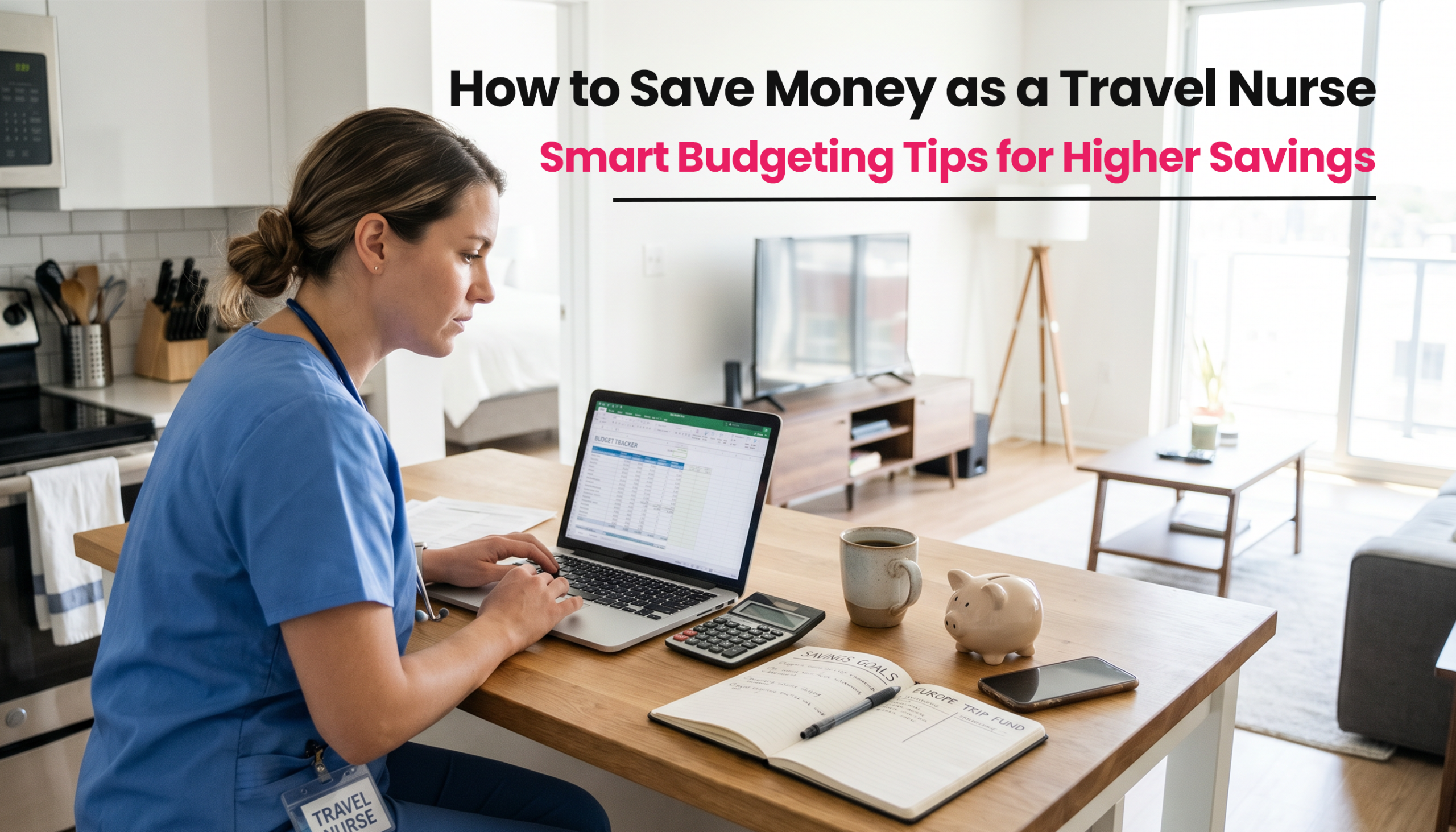
Travel nursing provides healthcare professionals with many benefits that traditional nursing roles can’t offer such as flexibility, higher earnings, and the opportunity to work in different locations across the country. It is one of the fastest ways to increase earnings and improve financial stability.
Travel nursing also has its own financial challenges. If you’re not careful, housing costs, moving costs, transportation, taxes and gaps between assignments can take a bite out of your paycheck pretty quickly.
This is why learning how to save money is as important as finding a high-paying contract for a travel nurse.
This blog helps travel nurses maximize savings and form positive financial skills. To do that, we’ve divided this blog into 2 parts:
-
- Part 1 focuses on strategies to save money with travel nurses can use immediately.
- Part 2 focuses on financial habits that can help nurses build long-term financial stability and wealth over time
Part 1: Strategies That Help Travel Nurses Save the Most Money
Part 1 addresses strategies that can be implemented to decrease travel nurse costs, maximize savings, and boost take-home pay for every assignment.
Pick Assignments That Increase Your Pot of Savings
While many nurses only consider the hourly rate when assessing the contract, the best-paying job isn’t guaranteed to be the most cost-effective.
When considering a travel nursing opportunity, travel nurses should look at:
- Hourly rates
- Housing stipends
- Tax-free reimbursements
- Cost of living
- Transportation costs
- Contract length
- Overtime opportunities
For instance, a contract that pays you less in a lower cost city can save you a little more than a higher paying contract in a more expensive metro area. It’s important to look at potential earnings and not just the salary amount.
As you consider a contract, figure out your monthly budget and the amount you can expect to bring in.
Save Money on Housing
One of the highest costs of travel nursing assignments is housing. How you manage your residence can have a huge impact on your savings and financial goals.
Some travel nurses opt for agency housing; others may receive some housing allowances and arrange housing on their own to save more.
Nearly half (49.7%) of all renter households spend more than 30% of their income on housing costs (according to a census.gov press release), which makes the following ways to reduce housing costs even more important:
- Sharing housing with another travel nurse
- Booking long-term stays instead of short-term rentals
- Negotiating discounted monthly rates
- Staying slightly outside expensive downtown areas
- Using furnished housing to avoid setup expenses
Saving a few hundred dollars on rent each month can compound thousands of dollars over several assignments.
Make a Budget Before Each Assignment
One of the smartest financial decisions a travel nurse can make is creating a budget before signing a contract. Having a pre-assignment budget will assist you in getting a better idea of how much you can afford to save.
Your budget should estimate housing, transportation, utilities, groceries, parking, licensing costs, emergency expenses, and entertainment and dining. With a plan in hand, you’re less likely to overspend and are in a better position to compare contracts to choose the best gig.
Plan for Moving and Travel Costs
The travel nurse lifestyle is all about mobility and if not carefully managed, can break your savings. Many nurses underestimate costs like gas, flights, car shipping, security deposits, temporary hotels, storage units, and furniture or household supplies. There may also be financial gaps between assignments where income temporarily stops.
Incorporating moving expenses into your assignment budget helps protect your savings and protects you from taking on unnecessary debt.
Cut Down on Everyday Expenses
Small daily expenses can quietly reduce travel nurse savings over time. An interesting article on CNET shows that cooking meals at home instead of ordering out can save you up to $1,440 per year!
Other habits like using public transportation when possible, limiting impulse purchases, taking advantage of travel nurse discounts, reducing subscription services, and choosing free local activities for entertainment also make a major difference.
It’s not about taking the fun out of it. It’s about spending with purpose, so that you’re able to invest more of your money in your long-term plans.
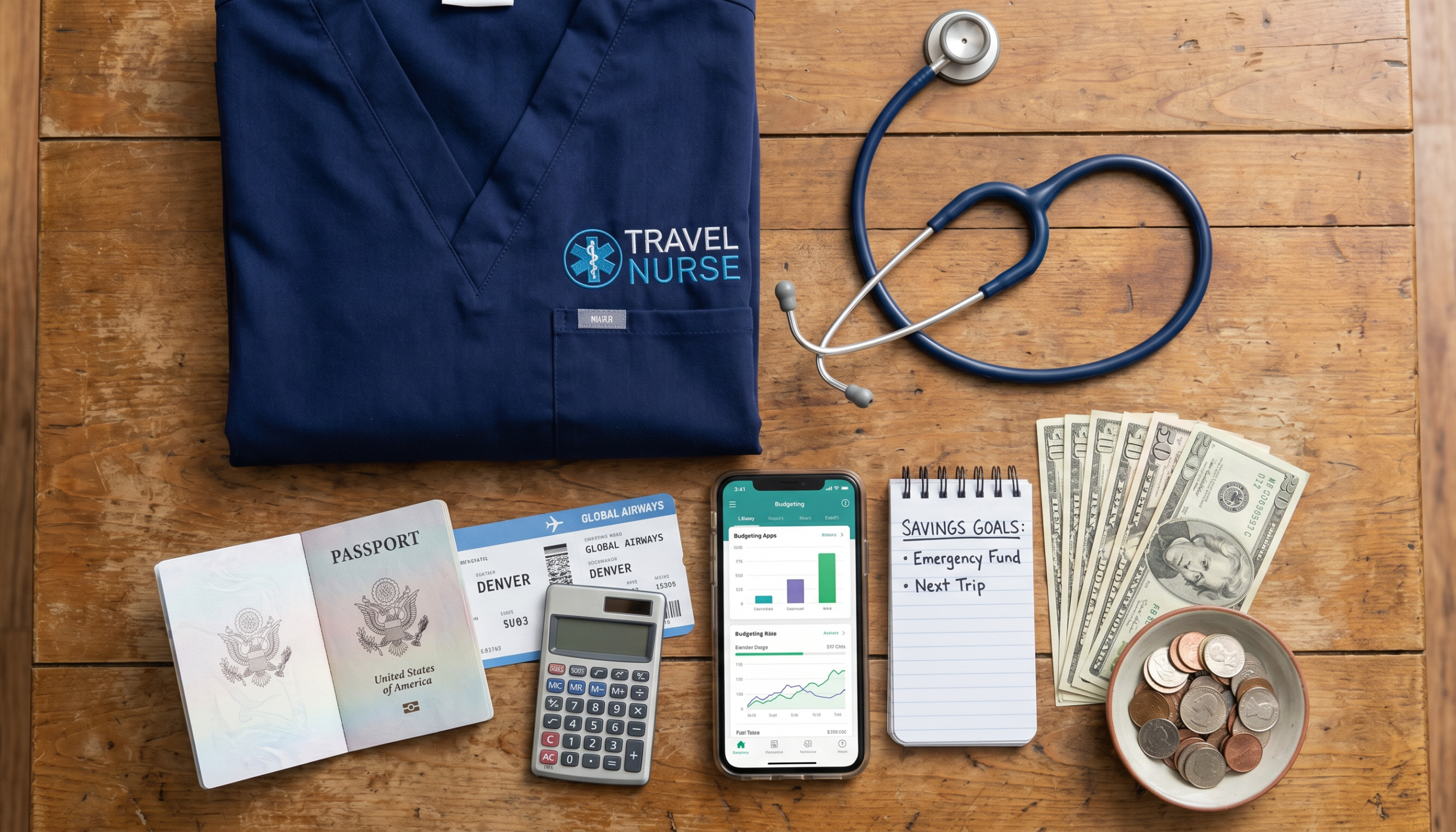
How to Save the Most Money If You’ve Just Started Your Travel Nursing Career
It’s easy to spend too much money on those first travel nurse assignments, but it can also be exciting when you first start out as a newly grad travel nurse.
It can be an exciting time for new travel nurses as they’ll likely be earning more than they ever have before, and they may not realize how crucial it is to budget early.
Some of the easy-to-follow saving tips are:
- Keeping living expenses low during your first contract
- Avoiding unnecessary car upgrades or large purchases
- Building an emergency fund before lifestyle spending increases
- Taking assignments with lower living costs
- Tracking every major expense carefully
The habits you build during your first year of travel nursing can shape your long-term financial success.
Part 2: Financial Habits That Compound Travel Nurse Savings Over Time
Part 2 is primarily about financial strategies that can be used to help develop stability and long-term wealth in the travel nurse career path.
Set Clear Savings Goals for Every Contract
Every assignment should have a financial purpose.
Some travel nurses save for:
- Paying off debt
- Buying a home
- Building retirement savings
- Creating financial security
- Taking time off between contracts
Establishing a specific savings goal for every assignment will assist in decision-making as well as maintaining realistic financial goals. This also enables the tracking of progress during contracts, which helps to keep everyone motivated.
Track Every Dollar You Spend
It is easy to see how many small items you spend each month, as many of the nurses do. Monitoring spending can reveal spending habits and unwanted additional costs.
The following are resources for travel nurses:
- Budgeting apps
- Banking tools
- Expense trackers
- Simple spreadsheets
Even fundamental tracker monitoring can create a significant distinction in financial understanding. The greater transparency, the more likely you’ll be to keep saving regularly.
Don’t Spend More Just Because You Earn More
One of the biggest financial blunders that travel nurses can commit is to spend more money as they earn more.
When a higher-paying contract comes, they will tend to:
- Luxury apartments
- Expensive travel
- Lifestyle inflation
- Overspending between assignments
It is good to enjoy your earnings; however, if you keep spending the same amount of money, you will have more money to save and have a long-term financial plan. Good management of finances is more important than quick earnings.
Build an Emergency Fund
Nursing assignments vary in regard to income and can be cancelled, subject to seasonal demand and changes in the market.
An emergency fund will serve as a buffer against contract cancellations, delayed start dates, illness or injury, unexpected travel costs, and time off between assignments.
The general rule for financial experts is to save 3-6 times your monthly expenses. Travel nurses have more flexibility and less financial stress while transitioning careers with emergency savings.
Review Your Budget Regularly
Travel nursing pay rates fluctuate often and depend on assignment location, housing market and individual goals. What works in one city doesn’t necessarily work in another. Regularly check your budget and make changes necessary based on rent increases, transportation costs, assignment length, savings goals, and lifestyle changes.
Regular budget reviews help keep your financial plan realistic and effective.
Understand How Taxes Work
The tax situations of travel nurses can be more complicated than the tax situations of traditional staff nurses.
Some of the key tax issues could be:
- Tax homes
- Tax-free stipends
- Multi-state income taxes
- Travel deductions
- Housing reimbursements
Knowing these laws can assist you in avoiding making expensive tax errors and in securing your income. Travel nurses will want to learn about tax matters and may want to consult with a qualified tax expert.
A travel nurse tax guide is also available to review and better understand the tax responsibilities and deductions of travel nursing.
Conclusion
There are two basic factors that make saving money as a travel nurse so easy: how much you make and how well you manage your money.
With careful assignment selections, budgeting, spending and long-term financial planning, travel nurses can save a lot over time.
Locating better-paying employment can also make a huge difference in maximizing savings potential.
If you want access to high-paying travel nursing opportunities, explore SkillGigs and discover assignments where you can earn up to $4,000 a week while gaining more flexibility and control over your career.
Frequently Asked Questions
How to make an extra $1000 from travel nursing
Travel nurses can boost their income by selecting assignments that are in demand, taking extra shifts, living in an area with a lower cost of living, cutting down costs on their housing and taking advantage of any tax-free stipends that are available.
Can travel nurses make $10k a week?
During periods of high demand, such as when COVID-19 surged, some travel nurses made very high wages weekly. Today, the $10k a week contract is uncommon but specialized crisis contracts and hot spots may still pay a lot more.
Why is travel nurse pay so low?
The salary of travel nurses is not necessarily low. Not all nurses are able to secure the best contracts. SkillGigs is an effective tool for nurses to access higher paying positions, clear pay, and flexible shifts.