
Travel nurse interviews aren’t like a typical hospital interview. You’re usually talking directly to a unit manager over phone or video rather than HR, sometimes with less than a day’s notice before the call. The timeline is short because the unit needs someone now, not in six weeks. That means your answers need to be focused and to the point from the very first question.
Knowing what to expect before you pick up the phone makes all the difference, so let’s look at how these interviews actually work.
How Travel Nurse Interviews Work
Most travel nurse interviews are conducted via phone or video and are generally 15 to 30 minutes long. Generally, you will be talking with the unit manager or charge nurse and not an HR recruiter because they will be the ones who determine whether you can be placed on their unit with little or no ramp up time. Expect a mix of quick background questions and a few that dig into how fast you adapt.
10 Common Travel Nurse Interview Questions and How to Answer Them
Why Did You Choose Travel Nursing?
Be honest and specific. Maybe you wanted variety, higher pay or the chance to work in different hospital systems before settling down. That is not a rehearsed answer a manager is going for, it’s more about the manager wanting to know that you’re not just passing through.
Example of a good answer: ” Travel nursing helped me build my skills faster than I expected, and it gave me the chance to work in specialties and environments I never would have experienced staying in one place.”
2. How Do You Adjust to a New Unit Quickly?
This question comes down to your first shift. Talk through what you’ll actually do in that first hour. Introduce yourself to the charge nurse, learn the unit layout, and ask questions about how things work instead of guessing.
Example of a good answer. “In my first shift, I introduce myself to the charge nurse and ask about unit specific protocols. I locate supply rooms, code carts, and the rapid response process. I ask questions upfront rather than making assumptions mid shift.”
3. What Is Your Experience With Different EMR Systems?
List the systems you’ve actually used, Epic, Cerner, Meditech, and so on. If you haven’t worked with the system this hospital uses, say so directly, then pivot to how quickly you’ve picked up new systems in the past.
Example of a good answer. “I’ve used Epic and Cerner extensively. I haven’t worked in Meditech yet, but I’ve picked up three different EMR systems across past assignments, usually within the first shift or two with a bit of orientation.”
4. How Do You Handle Floating to an Unfamiliar Unit?
Managers ask this because floating is a common part of travel contracts. Know your scope, ask for a quick orientation to the unit, and work within your ability.
Example of a good answer. “I ask for a tour of the unit layout and equipment, and I take on my assignment based on my skills and scope. I check in with the charge nurse if anything comes up.”
5. Tell Me About a Time You Had a Conflict With a Coworker or Provider.
Use a specific, concrete example. Focus on the communication and how it was resolved rather than assigning blame. Complaining about a difficult coworker is a red flag for managers.
Example of a good answer. “I once had a concern about medication timing. I calmly raised it based on what I was seeing in the patient’s vitals, and we discussed the order together and made an adjustment. It taught me that speaking up early and respectfully prevents bigger issues down the line.”
6. How Do You Handle a High Patient Ratio or a Sudden Patient Surge?
This question evaluates your prioritization skills. Talk through your triage thinking. Who you see first, how you reassess, and when you ask for help before things get overwhelming.
Example of a good answer. “I reassess my patients by acuity as soon as ratios shift, and I communicate with the charge nurse about what I can safely handle. I’ve learned to ask for help early rather than waiting until I’m behind. That’s better for the patients and for the team. ”
7. What Is Your Availability and How Soon Can You Start?
Be concise and precise. If you’re still finishing licensing or credentialing, say so now rather than after you accept the assignment.
Example of a good answer. “I can start within a week. My license and certifications are current, and I can complete any facility-specific requirements before my start date.”
8. Why Did You Leave Your Last Assignment?
Keep this factual and neutral, even if the assignment ended for a difficult reason. Contract ended, wanted a new specialty, wanted a different location, all of these are fine answers. Avoid criticizing a previous facility or team.
Example of a good answer. “My contract completed as scheduled, and I was ready for something new. I enjoyed the unit and the team, but I’m looking to keep building experience across different hospital settings.”
9. What Is Your Greatest Weakness?
Choose something real, then show what you’re doing about it. Managers are listening for self-awareness, not perfection.
Example of a good answer. “I used to be reluctant to delegate because I wanted to do everything myself. I’ve since gotten more comfortable handing off tasks and communicating my needs to the team, which has made me more effective, especially in fast-paced units.”
10. Do You Have Any Questions for Us?
Always come prepared with questions. Beyond making a good impression, it gives you information you need before accepting a contract, and it shows the manager you’re evaluating the fit just as carefully as they are.
A few worth asking:
- What does a typical patient ratio look like on this unit?
- What does orientation look like for a travel nurse on day one?
- Is there a chance of extension beyond the initial contract?
- What EMR system does the unit use, and is there any training provided?
Specialty-Specific Interview Questions
Beyond the general questions above, expect a few questions tailored to your specialty. Here’s what usually comes up by unit.
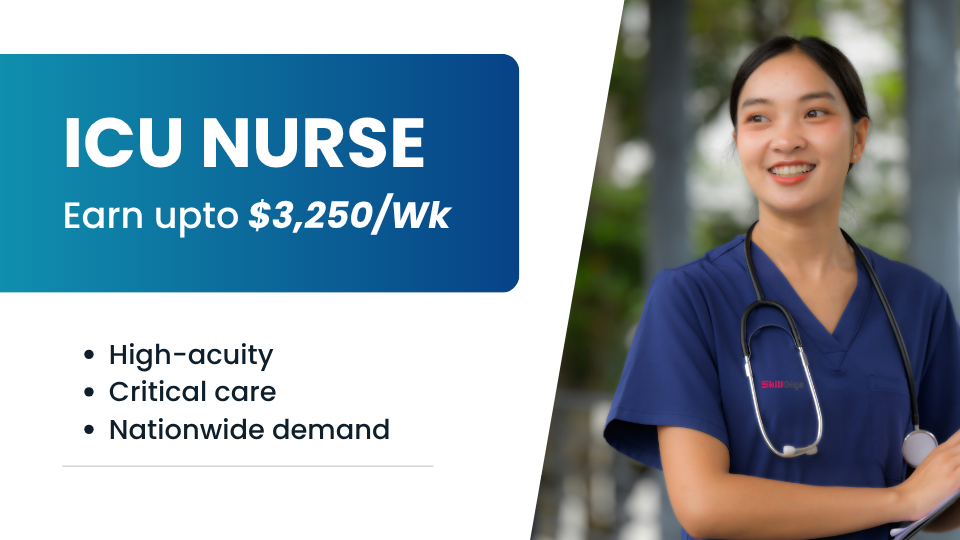
ICU Nurse Interview Questions
ICU interviews dig deeper into technical readiness and how you perform under pressure, since the margin for error is smaller.
How Do You Manage Ventilators, Central Lines, and Other Critical Care Equipment?
Talk through the specific equipment you’re credentialed on, and give a brief example of managing it under pressure. Managers want confirmation you can handle the technical side without hand holding.
Tell Me About a Time a Patient’s Condition Suddenly Deteriorated. What Did You Do?
Walk through your assessment and escalation process in order. What you checked first, who you notified, and what changed as a result.
How Do You Prevent Medication Errors in High-Risk Situations?
Talk about double checking with the care team, following procedure closely, and communicating clearly, especially when giving medications like vasopressors or sedatives.
Med Surg Nurse Interview Questions
Med Surg interviews focus less on acute crisis response and more on managing volume and competing priorities across a full patient load.
How Do You Prioritize Care for a Full Patient Load With Varying Acuity?
Describe how you prioritize multiple patient requests with varying needs, and how you adapt to changing priorities during a shift.
Describe How You’ve Handled Patient or Family Education Around a New Diagnosis.
Give an example of explaining a diagnosis or discharge plan in plain language, without medical jargon, and making sure the patient actually understood it.
Telemetry Nurse Interview Questions
Telemetry interviews test how well you read subtle signals and judge when something actually needs action.
How Do You Recognize and Respond to a Dangerous Arrhythmia?
Be specific about the rhythm changes you watch for and what your first actions are. This question checks both clinical knowledge and your ability to act fast.
What’s Your Process When a Monitor Alarms but the Patient Looks Stable?
Managers ask this to see if you consider the full picture rather than just the alarm. Talk about checking lead placement, assessing patient status, and documenting the event either way.
Hospice Nurse Interview Questions
Hospice interviews weigh emotional steadiness alongside clinical skill, since the role asks a lot of both.
How Do You Support a Family During a Patient’s Final Hours?
This is more about you and how you communicate than it’s about your clinical expertise. Describe how you communicate about what’s going on in simple and caring words, how you allow the family space while staying available.
How Do You Manage Your Own Emotions in a Role Centered on Loss?
Be honest about how you process grief and stay present for patients. Hospice managers are screening for burnout risk here as much as compassion.
NICU Nurse Interview Questions
NICU interviews look for patience and clear communication under emotionally difficult circumstances.
How Do You Communicate Complex Medical Information to Overwhelmed Parents?
Show patience and clarity. Parents with babies in the NICU are usually frightened, and you need to meet them where they are.
What’s Your Experience With Preterm Infants Versus Full-Term Infants?
Speak to the specific differences in care you’ve handled, temperature regulation, feeding tolerance, or medication dosing by weight.
PACU Nurse Interview Questions
PACU interviews focus heavily on recovery judgment calls and knowing when to escalate.
How Do You Assess a Patient’s Readiness for Discharge From Recovery?
Talk through your process for checking vital sign stability, level of consciousness, and pain control before clearing a patient to move on.
What Would You Do if a Patient Isn’t Waking up From Anesthesia as Expected?
This checks your escalation instincts. Walk through your assessment steps and when you’d bring in the anesthesiologist or surgeon.
L&D Nurse Interview Questions
L&D interviews test how you stay calm and communicate clearly when a situation turns urgent fast.
How Do You Handle a Sudden Complication, Like Fetal Distress or Postpartum Hemorrhage?
Give a specific example of staying calm, following protocol, and communicating quickly with the provider team.
How Do You Support a Patient Whose Birth Plan Changes Unexpectedly?
Talk about balancing patient autonomy with safety, and how you communicate a change in plan without adding to the patient’s stress.
Charge Nurse and Nurse Manager Interview Questions
Interviewing for a leadership or charge role means a different set of questions than a staff-level interview. Expect more focus on delegating, staffing, and managing conflict across a team rather than with one individual.
Common questions include what you’d do on a shift with insufficient staff, how you’d handle a nurse who isn’t performing well, and how you’d resolve two nurses requesting the same patient. Be ready to discuss both clinical and non-clinical leadership moments.
Travel Nurse Interview Tips
- Keep a folder with your licenses, certifications, and immunization records ready to reference on the call.
- Research the unit and hospital beforehand, even briefly, it shows the manager you’re serious about the assignment.
- Have two or three questions prepared in advance so you’re not scrambling at the end.
- Speak in specifics, not generalities. Real examples land better than general statements about being a “team player.”
- If you don’t know something, say so and pivot to how quickly you learn. Guessing is worse than admitting a gap.
Ready for Your Next Assignment?
No preparation will help you if you’re spending hours per week trying to find the right job. Looking for a smoother process when you’re searching for a travel nurse position? Join SkillGigs today and enjoy verified assignments that help you connect directly with hiring managers, and avoid the back and forth that slows down most travel nurse searches.