Imagine you are a brand-new travel nurse on your first travel nursing assignment, and you are expected to perform flawlessly from day one. What will truly set you apart is not your nursing credentials, but your nursing intervention skills and your ability to apply them in real-time patient care. In 2026, hospitals are not just filling gaps, but they are investing in travel nurses who have stronger intervention skills. In this blog, we will discuss what nursing intervention means in travel nursing and how to leverage your skills for high-paying contracts.
SkillGigs is an AI platform that matches your skills with high-paying contracts. Join now and get a $500 bonus once you sign your first contract with SkillGigs.
What are nursing interventions for travel nurses?
For travel nurses, nursing interventions are the actions taken by nurses to improve patient outcomes. As we know, travel nurses work on contracts and with each new assignment comes a different hospital and patient population, therefore mastering nursing interventions is not an option but an essential for travel nurses because they have to work harder than staff nurses to prove themselves from day one.
Travel nurses use the ADPIE process for nursing intervention in the nursing process.
Assessment: Gathering information about the patient, such as vital signs, medical history, lab results etc.
Diagnosis: Identifying actual and potential health problems.
Planning: Develop a care plan to address diagnosed problems
Implementation: Providing interventions to meet patient goals
Evaluation: Assessing the interventions to see if the goals were met so they can continue with the care plan or adjust it.
What are the objectives of nursing interventions in travel nursing?
- Improve patient outcomes.
- Reduce patient hospital stay.
- Prevent complications.
- Protect their nursing license.
What are the types of nursing interventions?
There are 3 types of nursing interventions.
- Independent nursing interventions
- Dependent nursing interventions
- Interdependent or collaborative nursing interventions
Independent interventions:
As we know, nursing interventions are the actions that nurses take to help patients recover. Independent nursing interventions do not involve a doctor’s order, for example:
- Repositioning the patient.
- Providing patient education.
- Monitoring patient vitals.
Dependent nursing interventions:
Actions that need a doctor’s orders are called dependent nursing intervention. Nurses need providers’ orders to carry out the actions, for example:
- IV or medication administrations.
- Blood transfusions.
- Advance wound care for the patient.
Interdependent or collaborative nursing interventions:
Nursing actions that require coordination with other healthcare professionals are called collaborative or interdependent nursing interventions. Such as physical therapists, nutritionists, etc.
- Collaborating with a physical therapist to develop a safe mobility plan for the patient who had surgery.
- Working or collaborating with a dietitian to create a nutrition plan for the diabetic patient.
- Collaborating with a respiratory therapist to manage oxygen therapy for a patient with COPD.

Examples of common nursing interventions that travel nurses perform
ICU (Intensive Care Unit) travel nurses:
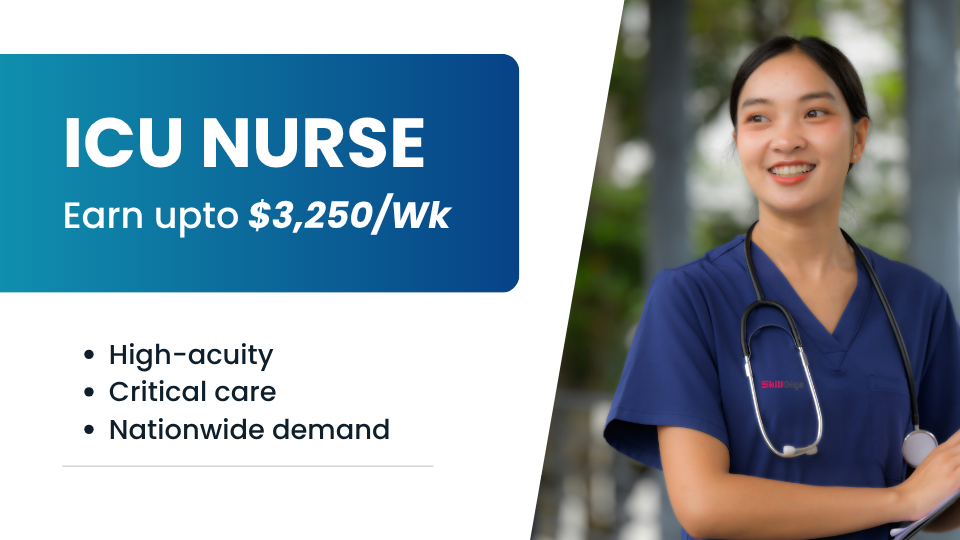
ICU travel nurses are in high demand because they take care of patients with critical conditions, and ICU interventions involve high-risk and lifesaving decisions. Some of the common ICU nursing interventions are:
- Continuous cardiac monitoring of a patient, such as tracking vital signs, oxygen saturation, cardiac rhythms, etc.
- Ventilator management, such as adjusting settings and monitoring for complications.
- Prevent infection and manage IV fluids.
- Sepsis management.
ER (Emergency Room) travel nurses:
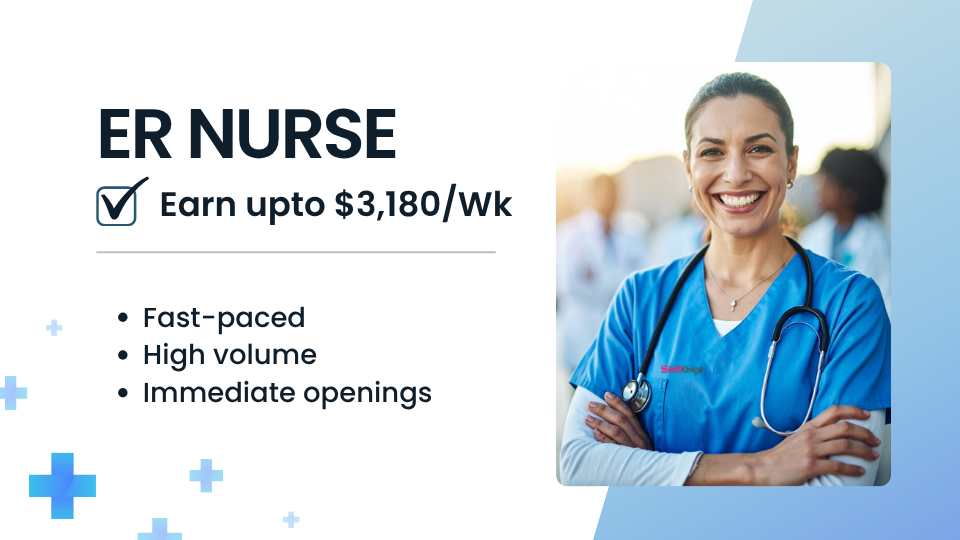
ER travel nurses perform rapid and unpredictable nursing interventions to save the lives of patients. Some of the examples of common ER nursing interventions are:
- Rapid triage assessments to see who needs care first.
- Trauma stabilization.
- Emergency medication administrations.
Med surg (Medical Surgical) travel nurses:
Med-surg nurses can manage 5 to 7 patients safely, and therefore, their demand is high because they deal with multiple patients with different conditions. Travel med-surg nurses are highly valuable during staffing shortages. Some of the common examples of med-surg nursing interventions are:
- Providing wound care
- Administering medication and IV fluids.
- Post op monitoring.
What is the NIC (Nursing Intervention Classification) system?
NIC stands for Nursing Intervention Classification, and it is a standardized system that is used in healthcare to categorize interventions nurses provide, making it easier to track, measure, and optimize patient care. NIC divides all nursing interventions into seven specific categories known as domains. It is a guide that lists over 500 nursing interventions.
- Basic physiological nursing interventions
- Complex Physiological Nursing Interventions
- Behavioral Nursing Interventions
- Family Nursing Interventions
- Safety Nursing Interventions
- Community Nursing Interventions
- Health System Nursing Interventions
Basic physiological nursing interventions
Simple and basic actions nurses do to meet patients’ physical needs, for example:
- Feeding a patient
- Assisting them to walk
- Helping with bathing
Complex Physiological Nursing Interventions
These are the advanced actions for a patient with complex needs. The purpose is to treat serious health problems that require skill and training, for example, administering medication and IV fluids.
Behavioral Nursing Interventions
Help patients change unhealthy habits and improve their mental and physical health, for example, interventions that help patients overcome addiction.
Family Nursing Interventions
Support both the patient and family so care continues at home, such as teaching the new mother how to take care of the baby.
Safety Nursing Interventions
Actions taken to keep patients safe from harm, for example, preventing falls.
Community Nursing Interventions
Actions taken to promote public health and prevent illness in the community, for example, giving polio vaccines to the public.
Health System Nursing Intervention
This nursing intervention involves actions to make sure that the healthcare facility is safe and clean, for example, keeping the facility organized or following protocols to prevent infections.
How do nurses use NIC (Nursing Intervention Classification) in nursing practice?
Nurses and travel nurses use NIC (Nursing Intervention Classification) to document and track care so that all healthcare team members know what’s done. This acts as effective communication between healthcare team members and ensures everyone is on the same page that results in improved patient care quality.
Example: Pain management might be coded as 1400, which involves the following:
- Assessing pain levels
- Administering prescribed medications
- Teaching relaxation techniques
Emerging trends travel nurses should know for nursing interventions
Technology in nursing: Using electronic health records, apps, and telehealth to provide accurate, safe, and remote care.
Evidence-based practice: Nurses use research and data to provide the best care to the patient.
Continuing education: Nurses can take courses, certifications, and workshops to improve intervention skills.
Types of nursing interventions: Nurses and travel nurses use dependent, independent, and interdependent nursing interventions to improve patient health.
What are nursing considerations?
Nursing considerations are important factors that nurses think about before, during, and after performing nursing interventions or actions to ensure safe and effective patient care.
What are the 5 steps of the nursing process?
The 5 steps of the nursing process are assessment, diagnosis, planning, intervention, and evaluation.
How do travel nurses document nursing interventions?
- Electronic health system.
- Nursing notes.
- Using standardized systems such as NIC (Nursing Intervention Classification).
- Flow sheets and checklists.
Conclusion
In travel nursing, strong nursing intervention skills are what keep travel nurses apart. By mastering dependent, independent, and interdependent interventions, using tools like NIC (Nursing Intervention Classification), and adapting to new environments, travel nurses can improve patient outcomes and can also unlock high-paying travel nursing contracts. With a platform like SkillGigs, these intervention skills can directly translate into higher weekly pay. Join SkillGigs now and explore high-paying travel nursing contracts with SkillGigs at your favorite locations.