
How do nurses decode what type of pain the patient is feeling? Stabbing, dull, sharp, burning? Pain is universal, and to understand it, it is important for nurses to ask the right questions. This is where PQRST comes in, a simple tool that helps nurses and travel nurses to turn subjective pain into actionable insights. Here in this blog, we will understand what PQRST is and how to master this technique.
But before we start, do you know that travel nurses are making $3000-$4000 a week? Yes, it is possible with SkillGigs, where you can find high paying trave nursing contracts. Explore top nursing assignments now that match your needs and skills.
What is PQRST?
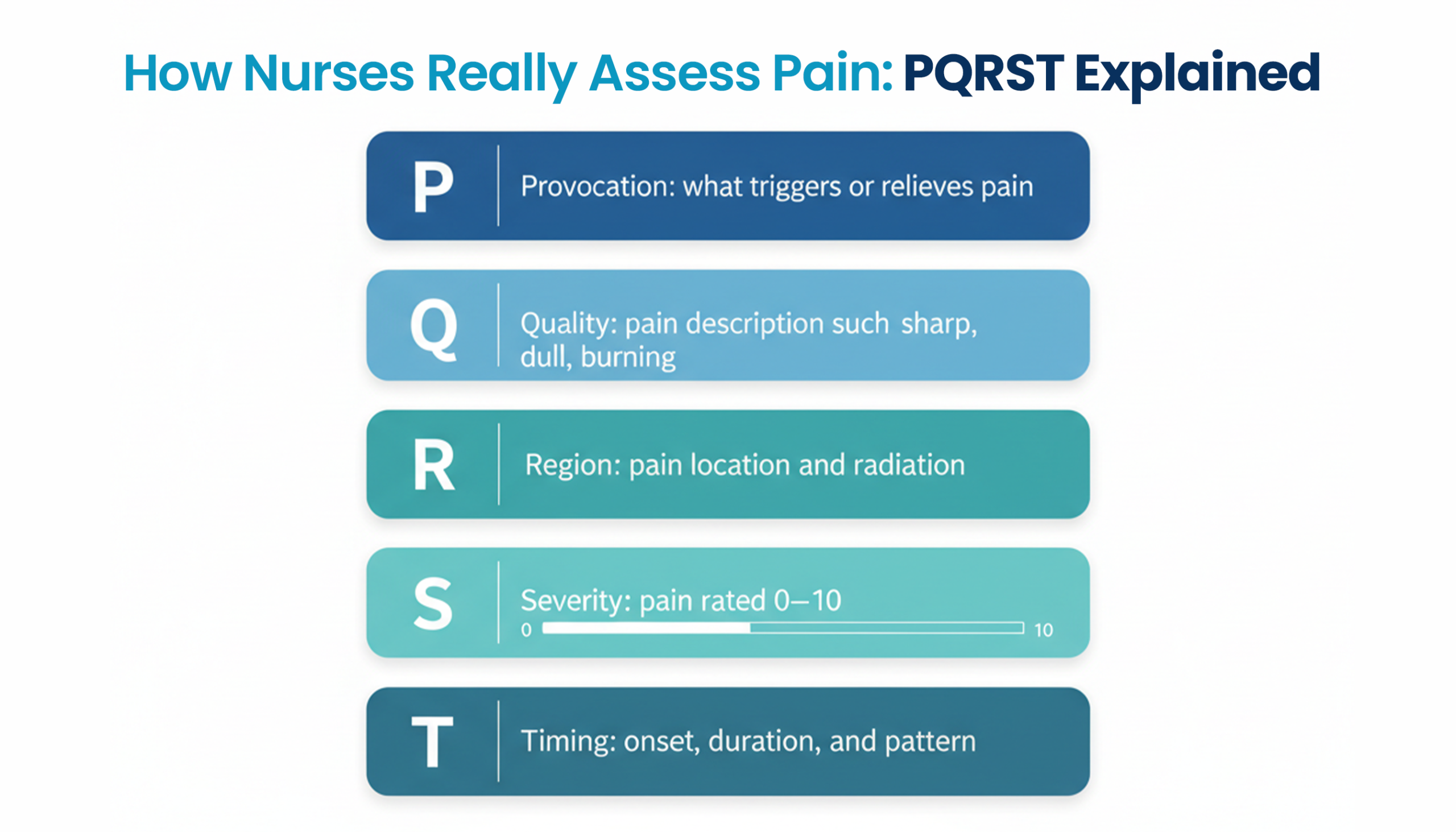
PQRST stands for Provocation / Palliation, Quality, Region / Radiation, Severity, Timing, and it is a mnemonic tool that helps nurses to assess pain and gather detailed information about a patient’s pain. Here is the detailed breakdown of each component of the PQRST pain assessment technique.
P – Provocation or palliation:
This is to find out the cause of the pain and what it is related to, such as triggers, contributing factors, and relief measures.
- What causes the pain?
- What makes it better or worse?
Such as bending or walking causes the pain, and pain medications like acetaminophen make it better.
Q – Quality:
Describing what type of pain it is, for example, it is sharp, stabbing, burning, throbbing, etc.
- What kind of pain is it?
- It is a sharp pain in my right leg.
R – Region/ Radiation:
It helps to identify the location of the pain and also whether it is localized or not.
- Where is the pain located?
- And does it spread anywhere else or not?
The pain is in the right leg and then goes down the ankle.
S – Severity:
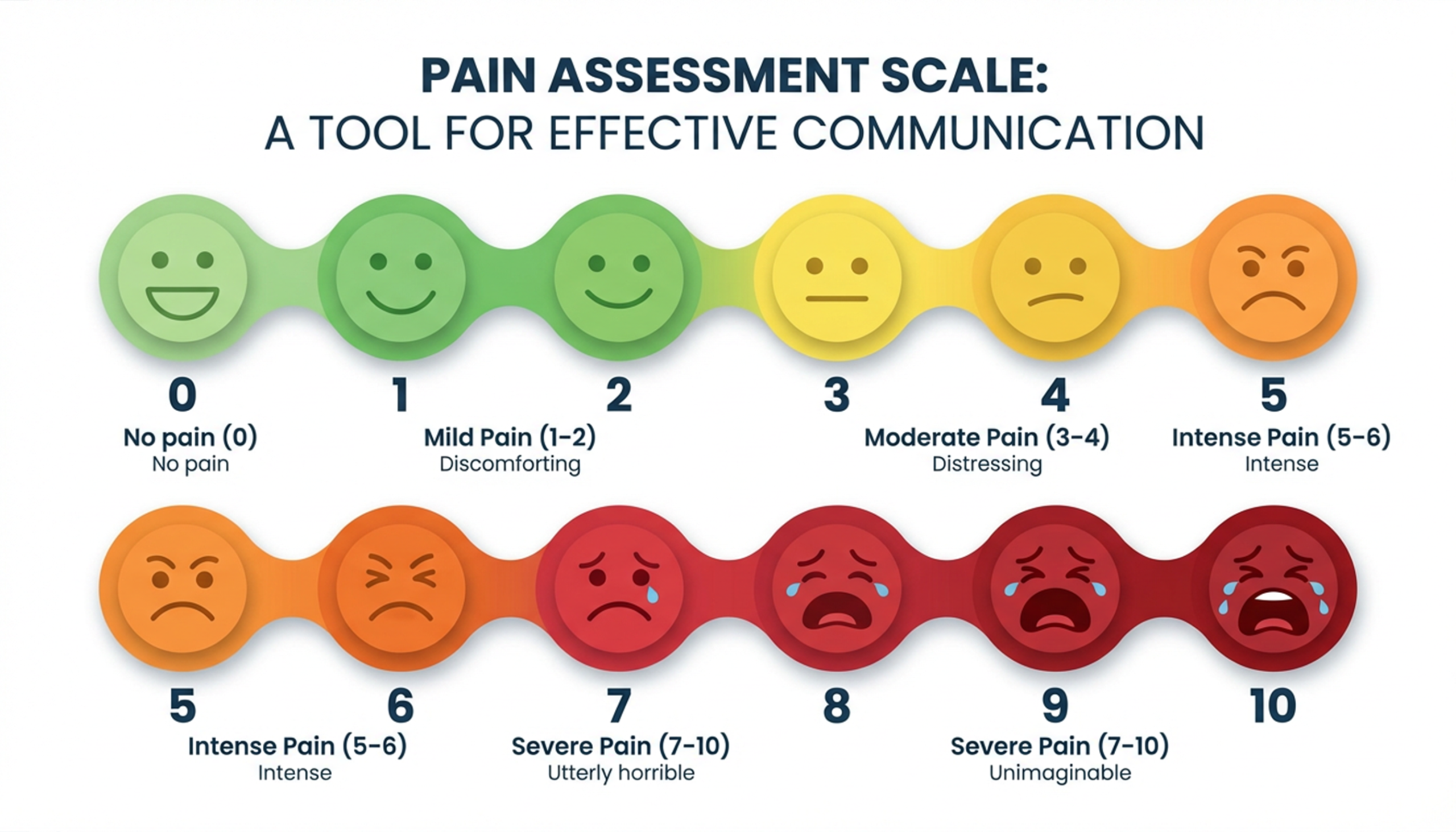
This quantifies pain for assessment and comparison by using tools such as the numeric rating scale, visual analog, and face pain scale.
- From scale of 1 to 10, what will you rate your pain?
- My pain is 8/10 right now.
T – Timing:
It helps to identify the patterns, triggers, and duration of pain.
When did the pain start? How long does it last? Is it intermittent or constant?
Pain started 2 days ago; it is intermittent and lasts for 2 hours.
PQRST pain assessment with example
Pain increases when standing up, and it is a sharp pain that starts in the leg and moves along. It gets worse at night and started 2 months ago. The pain gets better when the patient takes pain killer. The pain is 4/10 when sitting, but increases to 9/10 when standing up.
What is the purpose of the PQRST pain assessment?
- It is a systematic way to assess pain in patients.
- PQRST pain assessment techniques ensure that no detail is missed.
- This also helps nurses to differentiate between types of pain.
- Nurses can use the PQRST method for accurate documentation for legal purposes and also as a tool for communication between healthcare professionals.
Tips for effective use of PQRST pain assessment
- Always write the words used by the patient so there is no misunderstanding.
- Combine objective data with PQRST, such as vital signs, wound appearance, etc.
- Always use open-ended questions.
Conclusion
Pain may be subjective, but nurses and healthcare professionals use the PQRST method to assess the pain and turn it into actionable data that guides care. It is important for nurses to master PQRST pain assessment because it not only enhances pain management but also strengthens patient trust.
If you are a travel nurse and want to secure top high-paying travel nursing assignments, then join Skill Gigs and become part of our travel nursing world, where you get the opportunity to work in top healthcare facilities.