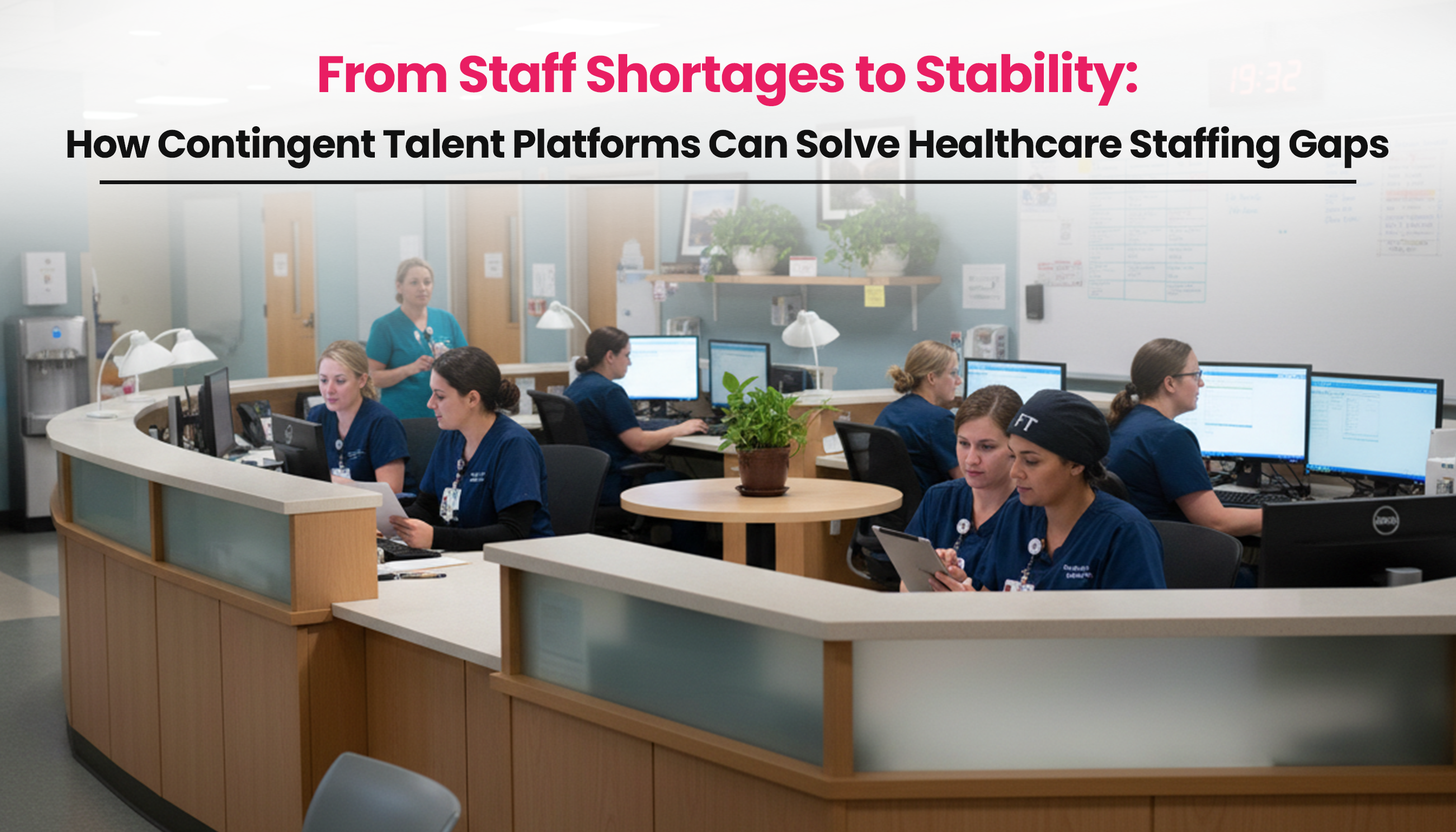
All across the USA, health systems are trying to deliver consistent patient care while wrestling with one persistent challenge: not enough clinicians when they’re needed most. Seasonal surges, census spikes, unexpected leave, and burned-out staff create healthcare staffing gaps that traditional staffing models simply can’t keep up with. As a result, leaders lose time, budgets stretch thin, and vacancies sit open far longer than they should.
This is exactly why many organizations are shifting toward contingent talent platforms. The solution that is built to bring control, speed, and transparency back to workforce planning. And for hospitals that want to move from chronic shortages to predictable staffing, the model behind platforms like SkillGigs CTM is proving to be a turning point.
The Real Reason Staffing Gaps Keep Growing
Most hospitals still depend on vendor-controlled MSP/VMS systems. While familiar, these models come with hidden friction points that make shortages worse:
- 11+ week time-to-fill in many markets
- Inflated bill rates tied to opaque markups
- Zero ownership of candidates or clinician pipelines
- Heavy agency reliance whenever census surges
- Little transparency into bids, rates, or clinician availability
When demand spikes, these systems can’t move fast enough and hospitals are left paying more for slower results. A contingent talent marketplace flips that dynamic.
How a Contingent Talent Platform Fills Healthcare Staffing Gaps
A modern healthcare workforce depends on reliability, speed, and data visibility. Contingent talent platforms are designed around those exact needs.
1. You own the marketplace and the pipeline.
Instead of depending on agencies, hospitals get their own branded marketplace, stocked with:
- ATS applicants
- Alumni
- Referrals
- Nurses, Allied Health, and Locums from the SkillGigs network
You aren’t borrowing someone else’s talent pool, you’re building a living pipeline you control.
2. Faster fills when it matters most
Traditional models average ~11 weeks to fill clinical roles. A platform like SkillGigs CTM reduces that to 5–6 weeks, sometimes even faster depending on specialty and location.
The reason is simple: constant stocking + always-on clinician demand campaigns + transparent bidding.

3. Clear rates, direct bids, no markups
Hospitals finally get the visibility they’ve been asking for:
- direct bidding
- transparent clinician rates
- CFO-ready reporting
With that clarity, costs come down and planning becomes predictable.
4. Built-in protection for compliance and co-employment
One of the biggest barriers to internal marketplaces is risk. CTM solves that by serving as:
- Employer of Record (EOR)
- Agent of Record (AOR)
This removes co-employment worries, misclassification issues, and payroll complexity, while still giving the hospital full marketplace ownership.
5. A complete engine: tech + stocking + hiring
Workforce stability isn’t just about technology. It’s about keeping the pipeline alive and ensuring every clinician can start quickly.
Contingent platforms tie all three pieces together:
- Tech: Analytics, dashboards, AI-driven activation
- Stocking: Continuous inflow of Nurses, Allied Health, and Locums
- Hiring: Credentialing, onboarding, redeployment, rapid backfill
All three work together every day to keep your staffing levels stable.
Why This Model Works for Healthcare
Healthcare staffing has unique demands: credentialing, Joint Commission compliance, schedule adjustments, auto-extensions, redeployment rules. A general marketplace can’t support those needs.
A healthcare-built contingent platform, however, is made for exactly this:
- License checks
- Background screenings
- Immunization verification
- Shift scheduling
- Rapid extensions
- Priority redeployment of high-performing clinicians
When these workflows live inside one system, staffing gaps close faster and stay closed. Hospitals using contingent talent platforms are seeing clear, quantifiable impact:
- Time-to-fill reduced from ~11 weeks to 5–6 weeks
- 20–30% reduction in staffing spend
- 80% less agency reliance
- 5–10% margin improvement
Moving to a platform is not just operationally smarter, it’s financially essential for systems trying to stabilize their labor spend without compromising care quality.
Final Takeaway: Stability Comes From Ownership
Healthcare staffing gaps aren’t going away on their own. But hospitals that take ownership of their contingent workforce instead of outsourcing it entirely are seeing more predictable staffing, lower spend, and faster response to surges. A contingent talent platform provides the structure, the technology, and the protection hospitals need to stay fully staffed year-round.
If your health system is ready to move from crisis-driven hiring to a predictable, owned workforce strategy, a platform like SkillGigs CTM is the most direct path forward.