
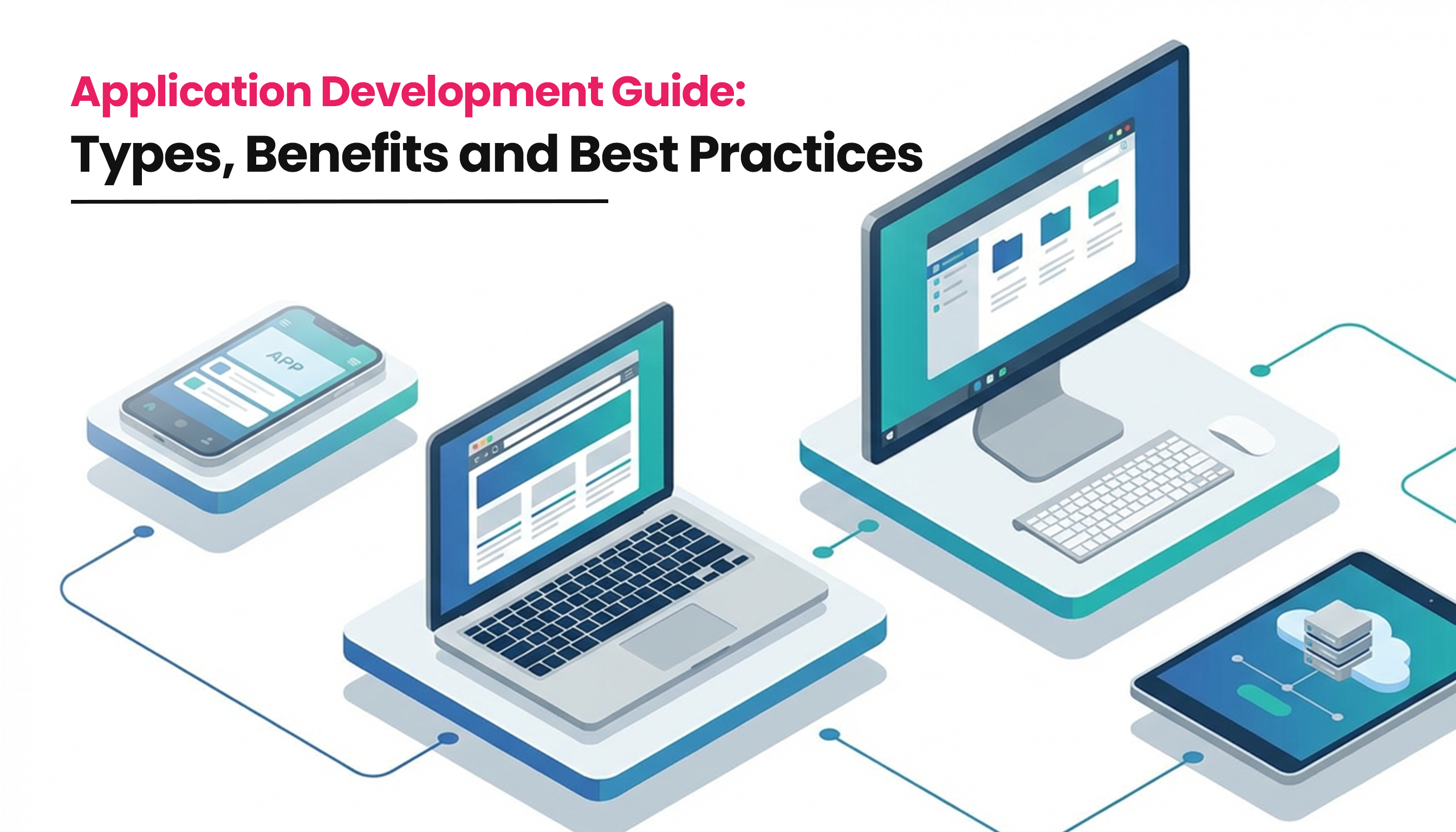
Application development has become one of the most essential capabilities for businesses and developers alike. From the mobile app you check every morning to the custom enterprise software that streamlines global operations, applications power our daily lives and modern business models.
Understanding the full scope of application development from planning and design to deployment and maintenance is essential for creating high-quality, scalable software that users love.
In this guide, we break down everything you need to know about application development: what it is, why it matters, common types, the step-by-step process, best practices, real use cases, and future trends shaping how apps are built in 2026.
What Is Application Development?
Application development is the end-to-end process of building software applications that run on desktops, mobile devices, or web browsers. This includes gathering requirements, designing user interfaces, writing code, testing functionality, launching the product, and maintaining it over time.
In simpler terms, it’s how an idea like “create a task tracking tool” becomes a fully functioning app that users can interact with. Whether the app automates meetings, processes sales, or connects people worldwide, the development process significantly influences how well it meets its goals and expectations.
Why Is Application Development Important?
Applications are everywhere: banking, communication, healthcare, education, entertainment, you name it. Modern businesses rely on custom applications to:
- Automate business processes and save time
- Deliver services to customers anytime, anywhere
- Integrate with existing systems for data-driven decisions
- Boost productivity and operational efficiency
- Support innovation and competitive differentiation
Without a structured development approach, apps can quickly become buggy, insecure, or fail to meet user needs. That’s why understanding application development isn’t just for coders, it’s crucial for product owners, business leaders, and stakeholders alike.
Types of Application Development
Applications come in many forms, each suited to different purposes:
1. Web Application Development
These apps run in web browsers and are accessible across devices without installation. Examples include email clients, e-commerce platforms, and online dashboards.
2. Mobile Application Development
Mobile apps are built for smartphones and tablets. They can be:
- Native apps (built for a specific platform like iOS or Android)
- Hybrid apps (using web technologies but wrapped for mobile)
- Cross-platform apps (built once and deployed on multiple OSs)
3. Desktop Application Development
These run on computers, Windows, macOS, or Linux, and are common for professional software like photo editors or office productivity tools.
Understanding which type fits your goal helps shape your development strategy and technology choices.
The Application Development Process (Step by Step)
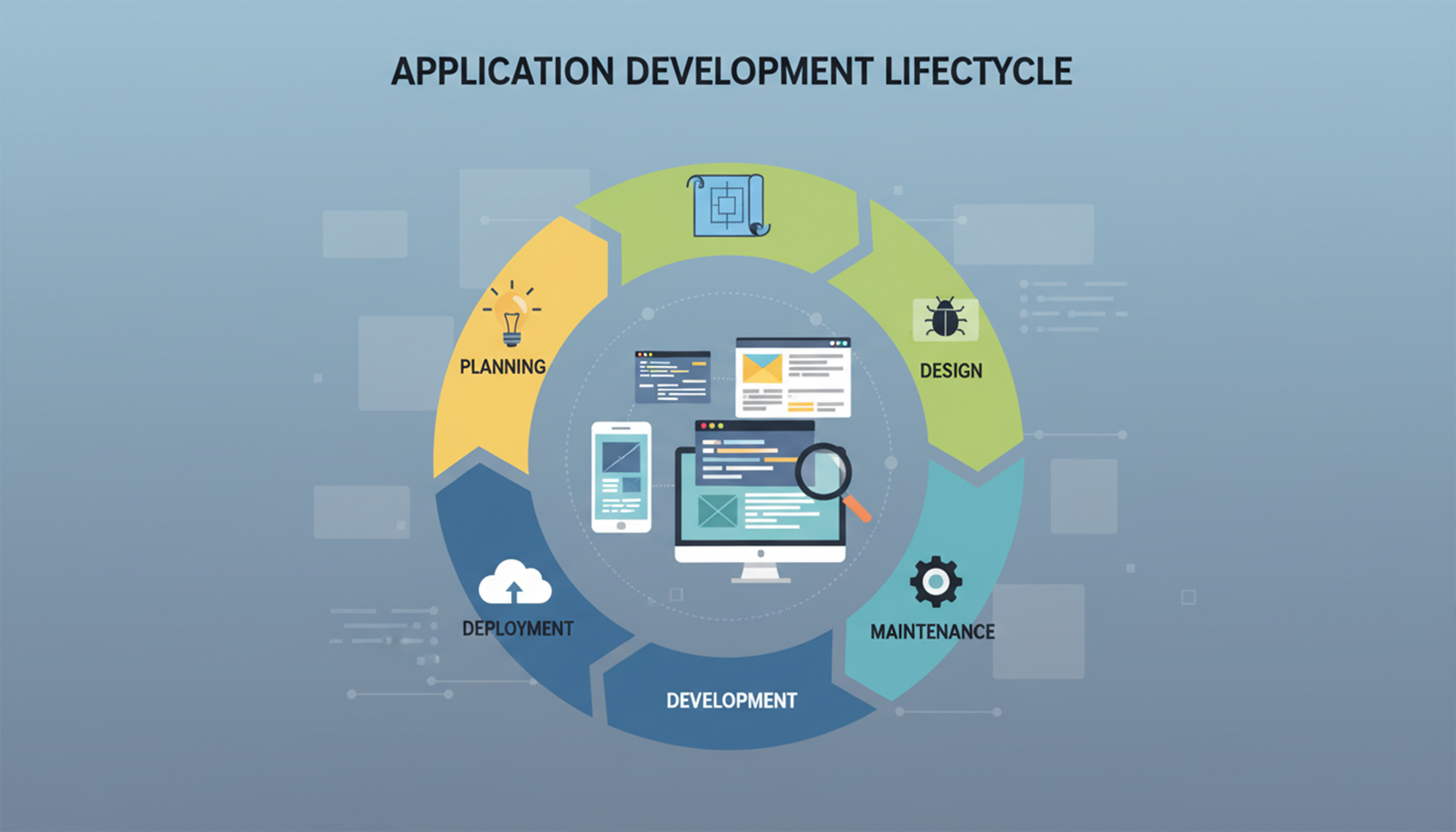
Building an application is not a one-off task, it’s a structured cycle that many teams follow to ensure quality and consistency:
1. Planning & Analysis
Start by defining objectives, target users, and core functionality. A clear roadmap reduces surprises later.
2. Design & Prototyping
UI (user interface) and UX (user experience) designers create wireframes and prototypes to visualize how the app will look and behave.
3. Coding & Development
Developers write code using appropriate tools and languages to turn designs into a working application.
4. Testing & Quality Assurance
Rigorous testing, functional, performance, security, and compatibility, ensures the app works smoothly before launch.
5. Deployment & Launch
After testing, the app is deployed to servers, app stores, or distribution platforms, ready for real-world use.
6. Maintenance & Updates
Apps must evolve. Ongoing monitoring and updates keep them secure, relevant, and aligned with user expectations.
Best Practices for Successful Application Development
To build high-quality applications, follow these proven practices:
Focus on UX First
A great app isn’t just functional, it’s easy and enjoyable to use. Wireframes, prototypes, and user feedback improve design quality.
Use Structured Methodologies
Methodologies like Agile and DevOps help teams stay coordinated and deliver faster with continuous improvement.
Document Everything
Clear documentation of specs, decisions, and user stories ensures every team member understands requirements.
Prioritize Testing Early
Testing should start early and continue throughout development to catch issues before they become costly.
Plan for Scalability & Security
A good app needs to handle growth and protect user data with strong security practices built in from the start.
Communicate Clearly
Teams that communicate regularly, both internally and with stakeholders, deliver better results with fewer surprises.
How to Choose the Right Application Development Partner
If you’re outsourcing development, consider these key factors:
- Experience & expertise in your industry
- Strong communication and transparency
- Modern tech stack and tools
- Security protocols and best practices
- Post-launch support and maintenance
A reputable development partner can reduce risk, speed up delivery, and ensure your application meets quality standards.
Conclusion
Application development is far more than writing code, it’s a strategic process that brings ideas to life through structured planning, design, testing, and continuous improvement. Whether you’re building your first app or upgrading an enterprise platform, mastering the fundamentals of this lifecycle will set you up for success.
With strong practices, clear objectives, and the right tools, application development becomes not just a technical task but a competitive advantage in the digital world.