
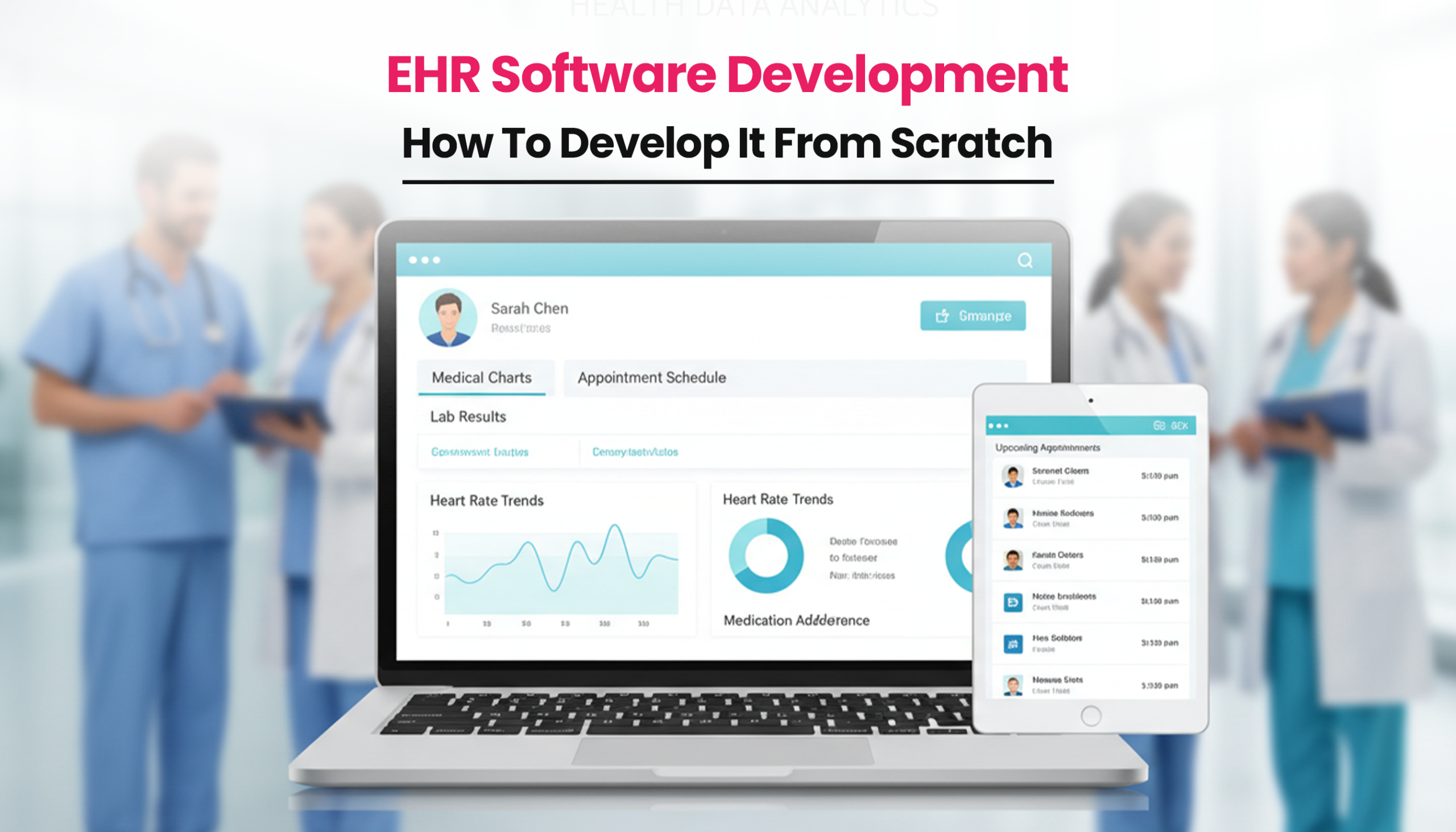
In today’s digital era, Electronic Health Record (EHR) systems have become essential tools for modern healthcare. They replace paper files, streamline clinical workflows, improve patient outcomes, and support data-driven decision-making. As healthcare organizations continue adopting digital records, the demand for custom EHR software development is rising rapidly, with the global EHR market expected to reach tens of billions of dollars by the end of this decade.
If you’re planning to build an EHR platform or enhance an existing system, this guide walks you through what EHR software is, its core features, types, technology stack options, development stages, and best practices, giving you a roadmap that aligns with today’s healthcare technology goals.
What Is an EHR System?
An Electronic Health Record (EHR) is a digital version of a patient’s health record that can be accessed and shared across authorized healthcare providers, including doctors, laboratories, pharmacies, and hospitals. Unlike traditional paper records, EHRs centralize medical histories, diagnoses, medications, lab results, prescriptions, immunizations, and more in a structured, digital format.
EHR systems improve clinical coordination, reduce errors, enhance documentation accuracy, and provide clinicians with a unified view of patient care history, which leads to better quality of care and streamlined healthcare delivery.
Key Features of Effective EHR Systems
A fully functional EHR system supports clinical, administrative, and analytical workflows. Core components include:
Patient Management
This feature handles patient registration, admissions, discharge, transfers, demographics, unique IDs, and contact details. It creates a central profile for every patient that tracks all future interactions, treatments, and data.
Clinical Records
The clinical module enables providers to capture patient histories, examinations, treatment plans, progress notes, and surgical details, consolidating all care activities in one place. Integration with pharmacy and nursing modules improves continuity of care.
Billing and Financial Dashboards
EHR systems often include a billing engine that tracks charges, claims, payments, analytics, and financial performance. Advanced dashboards help healthcare facilities evaluate revenue streams, departmental costs, and optimize financial workflows.
E-Prescriptions
Electronic prescribing allows clinicians to generate and transmit prescriptions digitally. This improves accuracy, saves time, and provides a historical record of all patient medications.
Lab Integration
Integrating EHRs with laboratories enables real-time access to test results and diagnostic reports, helping clinicians make informed decisions faster. It also improves care coordination between providers and labs.
Types of EHR Software
EHR systems vary based on deployment model and use case. Choosing the right type depends on organizational needs, access requirements, and infrastructure strategy:
- Cloud-Based EHR – Hosted remotely, scalable, and accessible anytime from anywhere.
- On-Premises EHR – Installed locally, giving healthcare organizations full control over data and security.
- Web-Based EHR – Browser-accessible systems ideal for multi-location access.
- Mobile EHR – Apps for smartphones and tablets, improving mobility for clinicians.
- Personal Health Records (PHR) – Patient-centric tools for individuals to manage their own health.

Essential Tech Stack for EHR Development
There’s no single “perfect” stack for EHR software, but some technologies are commonly chosen for their performance, security, and compliance capabilities:
- Backend: Python, Java, .NET, Node.js (secure, scalable)
- Frontend: React, Angular, Vue.js (responsive UI)
- Database: PostgreSQL, MySQL, MongoDB (structured and unstructured data support)
- Cloud Platforms: AWS, Azure, Google Cloud (for scalability and availability)
- Security Libraries: OAuth, JWT, encryption standards (for patient data protection)
Many EHR developers also design systems compliant with standards like HIPAA (in the U.S.) and interoperability protocols like FHIR or HL7 to ensure seamless data exchange across healthcare systems.
The EHR Development Process (Step by Step)
Building an EHR system requires careful planning and structured execution. Here’s a breakdown of key development phases:
1. Idea Validation
Before writing any code, validate your concept and define your goals. This includes understanding market needs, target users, competitive landscape, and regulatory requirements.
You must determine the core features and how your solution will differentiate itself in a crowded healthcare technology market.
2. Prototyping
Next, draft a prototype or wireframe that visualizes how the EHR will look and function. This step helps collect early feedback, refine user flows, and align stakeholders before investing in full development.
3. Design and Development
This phase involves UI/UX design and backend architecture. Developers build core modules — such as patient record management, billing, lab integration, and e-prescribing — using secure and scalable frameworks. Each functional module should be developed iteratively, tested, and refined.
4. Quality Assurance and Testing
Thorough testing ensures stability, security, and compliance. QA teams check for bugs, performance issues, and unanticipated workflows. Testing should include functional, performance, usability, and security evaluations.
5. Launch and Maintenance
After testing, the EHR can be deployed live. Post-launch, ongoing monitoring, updates, and support are essential to address bugs, incorporate feedback, and ensure the system remains compliant and secure.
Critical Considerations for EHR Projects
Security and Compliance
EHR systems store highly sensitive patient data, making security a top priority. Implement strong encryption, multi-factor authentication, role-based access controls, and regular security audits to protect data and meet regulatory standards.
Healthcare regulations vary by geography, such as HIPAA in the U.S. or GDPR in Europe, and non-compliance can result in heavy fines. Partnering with experienced healthcare development teams can help you navigate these requirements.
Usability and Workflow Alignment
Healthcare professionals rely on EHR systems in high-pressure environments. Prioritize intuitive design, clear navigation, and efficient workflows to improve adoption and reduce training time.
Scalability and Future Growth
Healthcare organizations grow and change; your EHR should be built with scalability in mind. Modular architecture, cloud-ready infrastructure, and flexible database solutions ensure your system can adapt as needs evolve.
Conclusion
EHR software development plays a critical role in modern healthcare operations. A well-built system improves clinical efficiency, ensures regulatory compliance, and enables secure, seamless access to patient data across care teams.
Success depends on clear requirements, user-centric design, interoperability, and strong data security from the start. When these elements come together, an EHR system becomes more than a record-keeping tool, it becomes a foundation for better care delivery and long-term digital growth.