

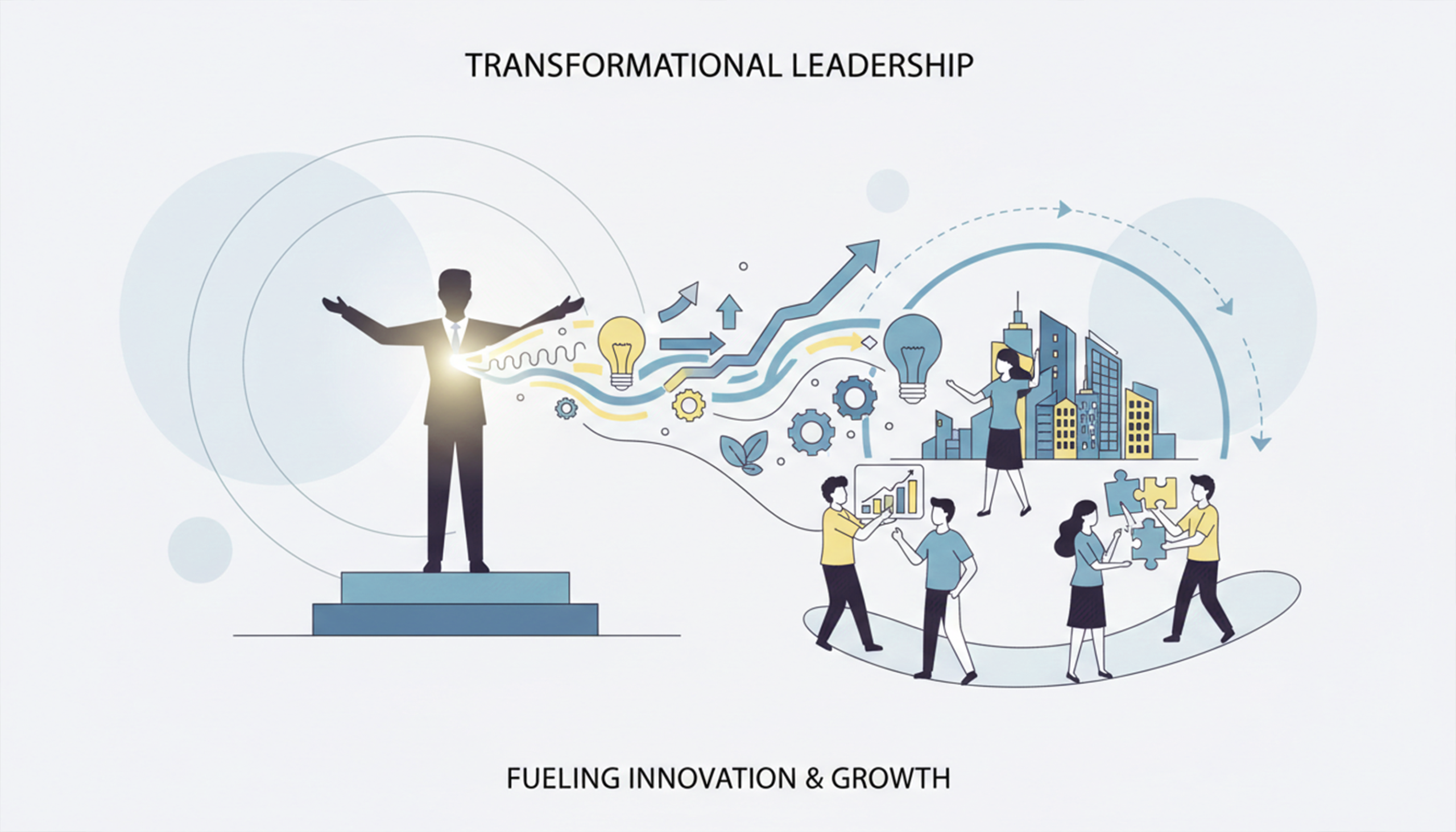
In today’s fast-moving business world, leaders must do more than manage teams and meet deadlines — they must inspire innovation, foster a culture of growth, and guide their organizations through change. Transformational leadership is a leadership style designed to do exactly that. Rather than relying on command-and-control tactics, transformational leaders motivate teams by igniting creativity, building trust, and setting a compelling vision for the future.
This comprehensive guide explains what transformational leadership is, how it works, the core model that defines it, how it differs from traditional leadership styles, and why it’s especially valuable in technology-driven sectors today.
What Is Transformational Leadership?
Transformational leadership is an approach that encourages, inspires, and motivates employees to innovate and drive meaningful change within an organization. At its core, this style emphasizes authenticity, strong corporate culture, and employee empowerment. Transformational leaders act as role models; they set an example at the executive level and trust trained employees to take ownership of decisions without micromanagement.
Rather than maintaining the status quo, transformational leaders are change agents who help organizations adapt to shifting trends, technological advances, and competitive pressures. This leadership approach is broadly applicable across industries, but it is particularly vital in fast-paced sectors like IT, where innovation and agility are essential.
Origins and Theory
The concept of transformational leadership first emerged in the 1970s, introduced by James V. Downton, and later expanded by James Burns in 1978. In the mid-1980s, researcher Bernard M. Bass further developed the theory, providing a framework for measuring the effectiveness of transformational leadership and identifying the behaviors that distinguish transformational leaders.
Although the core principles were developed decades ago, transformational leadership remains a highly relevant model in today’s business environment, especially where innovation, adaptability, and employee engagement are priorities.
The Four Core Elements of Transformational Leadership
Bass’s model identifies four defining elements of transformational leadership. Understanding these helps leaders cultivate the behaviors that inspire and empower teams:
1. Idealized Influence
Transformational leaders serve as role models. They lead with authenticity, integrity, and transparency, earning trust and respect from their teams. This influence encourages employees to mirror behaviors that support organizational values and performance standards.
2. Intellectual Stimulation
These leaders challenge assumptions, encourage creative thinking, and support new approaches to solving problems. By fostering a culture that welcomes experimentation and innovation, teams feel safe exploring bold ideas.
3. Inspirational Motivation
Transformational leaders articulate a compelling vision that motivates employees to commit to shared goals. They build a sense of purpose and meaning that goes beyond routine tasks, inspiring teams to go the extra mile.
4. Individual Consideration
Individuals are treated as unique contributors with distinct strengths and development needs. Transformational leaders provide tailored mentorship, support personal growth, and foster an environment where employees feel valued and heard.
These elements create conditions where employees feel empowered, respected, and motivated to contribute their best work.
Why Transformational Leadership Matters Today
Transformational leadership is especially relevant in sectors facing rapid technological change, such as IT, digital services, and innovation-driven businesses. Leaders in these environments must not only manage daily operations but also steer strategic change, inspire creative thinking, and prepare teams for future challenges.
In IT roles such as CIOs, transformational leadership helps align technology initiatives with organizational strategy, encourages cross-functional collaboration, and supports digital transformation efforts. This style contrasts with more traditional models that focus solely on control, consistency, and routine execution, which may limit innovation in dynamic environments.
Applying Transformational Leadership
Developing these capabilities involves cultivating a few key practices:
- Lead by example: Demonstrate the values and behaviors you want your team to adopt.
- Encourage innovation: Provide opportunities for experimentation and new ideas.
- Build strong relationships: Understand individual motivations and tailor support accordingly.
- Communicate vision clearly: Inspire teams with a compelling future direction.
While formal certifications exist, it is as much about mindset and behavior as it is about credentials.
Conclusion
<p>Transformational leadership is more than a management style; it’s a strategic approach that enables organizations to innovate, adapt, and thrive in complex business environments. By focusing on trust, inspiration, and individual growth, transformational leaders foster a culture where employees feel empowered to take risks, solve problems creatively, and contribute meaningfully to organizational success.
Whether in technology, healthcare, or any sector undergoing change, transformational leadership continues to be a critical driver of innovation and long-term performance.