
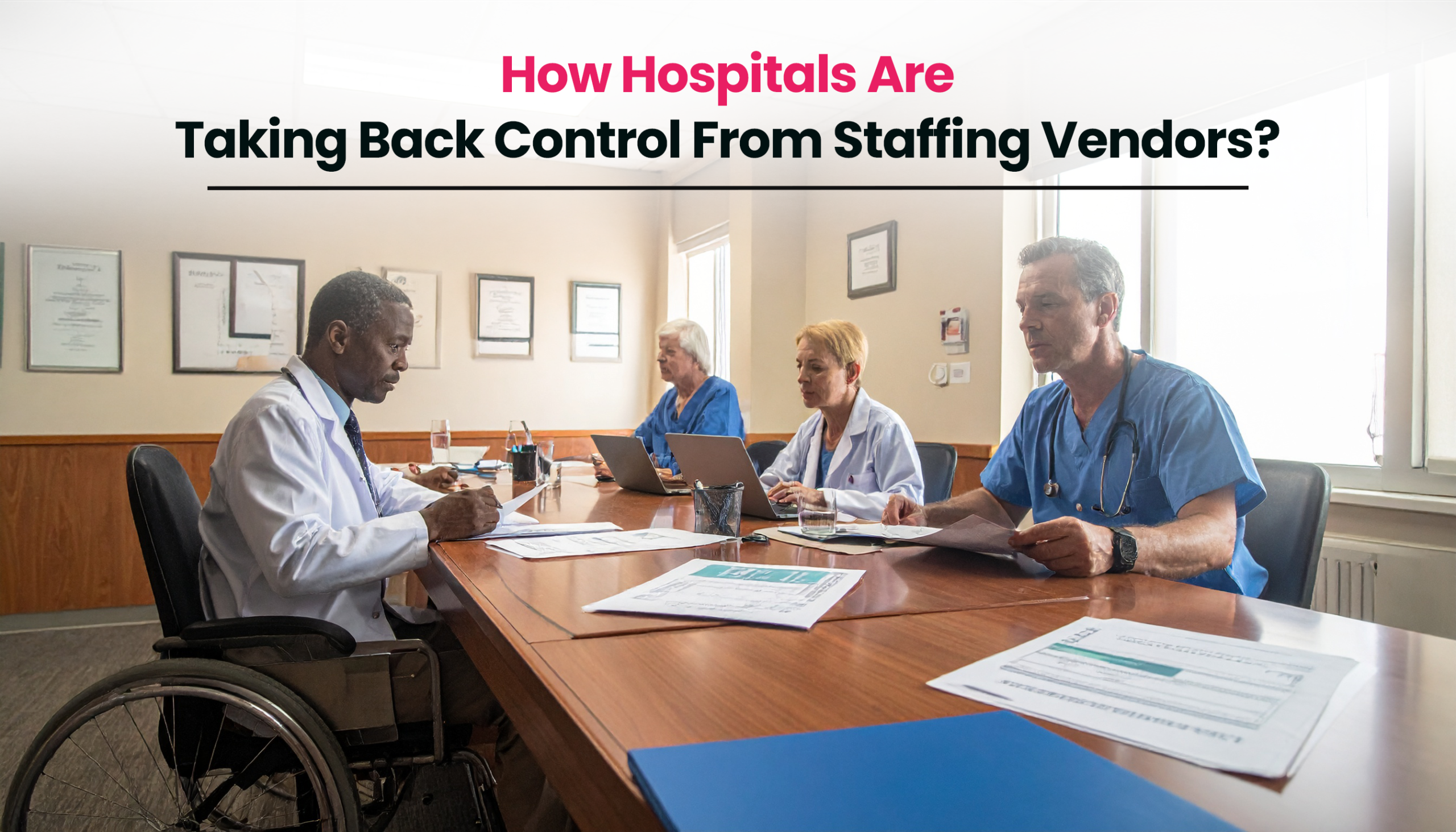
Healthcare staffing was considered a temporary challenge but today, it has become a serious workforce strategy issue. Nurses are in short supply; agencies are expensive, and hospitals are paying millions in contingent labor throughout the country. Many health care leaders now understand that the business model of a staffing vendor wasn’t intended to provide workforce stability. It was created to fill gaps which are frequently paid at a high price.
Over the years, hospitals were willing to take this trade-off just because there were not many other options. In times of emergency, agencies were called in to provide nurses to a unit. When census was unexpectedly high, temporary coverage was provided by vendor networks. However, it was not long before many organizations became so reliant on staffing vendors that they did not realize how detrimental that reliance could be.
Today, more knowledgeable hospital leaders are casting their thoughts back on a different approach. They are looking at how to stop renting your workforce and how to start creating ownership, transparency, and long-term control of their workforce.
Those healthcare organizations that don’t adapt continue to struggle with expenses escalating a lack of visibility into staffing performance and a constant need for outside vendors. Those who are adapting are finding that there are other more sustainable approaches (that minimize reliance and increase hiring agility and continuity)
The Problem with “Renting” Your Workforce
While traditional staffing vendors can help fill short-term staffing needs, they also bring about long-term operational issues that many hospitals are unaware of. In times of crisis and short-term staffing needs, agencies can be helpful and useful, but overreliance on them can have a subtle effect on financials, retention and team stability.
Rising Staffing Costs and Vendor Markups
Excessive cost inflation is one of the major problems that the hospitals encounter. Staffing vendors add markups to bill rates especially for travel nurses and specialty clinicians, driving the staffing costs significantly.
Hospitals pay high costs not because talent is in short supply. But there are many layers between talent and hospitals due to the vendor model. Pricing is not transparent, which makes the workforce budgeting more challenging for finance and operations.
Loss of Workforce Ownership
Hospitals that rely on staffing vendors often find themselves losing the staff they’ve helped recruit and train. The relationship goes beyond the end of a particular assignment and continues with the agency, not the hospital.
This makes organizations constantly wind up paying to obtain, credential and reacquire clinicians they already know and trust. Rather than developing a sustainable workforce ecosystem, hospitals are reliant on third-party arrangements that are not under their control.
High Turnover and Low Continuity
Staffing models with agencies may also pose continuity issues. Frequently changing staff on the floor can lead to irregular team dynamics, multiple onboarding processes, and a lack of understanding of hospital procedures and attitudes.
This can add to the strain on the core workforce, particularly if they are continually replacing temporary staff. Without workforce continuity, Burnout and morale problems can arise for permanent employees over time.
Reactive Staffing Instead of Strategic Planning
Reactive staffing vendors are the norm. Talent is requested by hospitals only when it is needed in an emergency. This leaves staffing teams in constant crisis mode instead of having the time to proactively look at staffing needs.
With a lack of staff, reactive staffing practices have become a costly and unsustainable option in healthcare.
Limited Visibility into Workforce Performance
Another challenge is that there’s no centralized workforce intelligence. Multiple staffing vendors complicate the tracking of staffing vendor performance, redeployment opportunities, or long-term staffing trends in hospitals.
If an organization is not aware which clinicians are doing well over time, it’s missing out on being able to establish more robust contractor pipelines.
What “Taking Back Control” Actually Means
It is not about replacing contingent workers. Many hospitals will likely be flexible in staffing for the foreseeable future. The major difference is how you manage that workforce.
Healthcare organizations that value transparency, flexibility and long-term sustainability over relying solely on vendors are moving toward workforce ownership models.
Build Internal Talent Pools
Building internal talent pools is one of the most effective methods hospitals are using to decrease their reliance on agencies. This includes the recruitment of former employees, per diem clinicians, silver-medal candidates, and previous applicants who are already acquainted with the organization.
Hospitals keep an active relationship with suitable clinicians who can be recalled quickly rather than recruiting again when a vacancy arises. This not only helps in continuity but also helps in lowering the sourcing costs.

Leverage Healthcare Talent Marketplaces
Organizations today are increasingly turning to healthcare talent marketplaces to gain direct access to clinicians on a contingent basis without relying solely on staffing vendors.
Talent marketplaces enable hospitals to handle and leverage their own talent pipelines to enhance hiring velocity and transparency. AI-powered matching systems enable clinicians to explore job listings, keep their credentials updated, and connect directly with facilities.
This enables hospitals to have more visibility of their workforce availability, rates, performance, and a more flexible hiring model.
Create Preferred Contractor Networks
Hospitals are also transitioning from the agency flip-flop method to preferred contractor systems.
This allows for the identification of high-performing contingent clinicians, enabling long-term partnerships and minimizing the onboarding hassle. This will help reduce friction and make the workforce more consistent through the identification of high-performing contingent clinicians and maintaining long-term partnerships. Contractor models that are preferred offer facilities to keep trusted talent while maintaining staffing flexibility.
Use Workforce Data More Strategically
Another key transformation is the shift from a reactive approach to workforce data. Hospitals are starting to look at staffing trends, staff turnover, staff seasonal variation, and staff fill time to better predict future staffing needs.
This enables staffing teams to build talent pipelines ahead of shortages or surge time periods instead of reacting to a crisis.
Why This Shift Is Accelerating Across Healthcare
It’s not simply a cost-cutting measure. It’s part of a larger change in the way healthcare organizations approach staffing plans.
Hospitals are coming to the realization that contingent labor isn’t just temporary replacement staff but a critical component of the staffing infrastructure. As a result, leadership teams are looking for models that balance flexibility with control.
This change is particularly crucial in the face of ongoing challenges of clinician workforce shortages, budget constraints, and rising competition within the healthcare sector. Owned systems can have a more responsive workforce strategy, lower unnecessary investment, and better workforce stability over time.
Those organizations looking at alternatives to staffing vendors are also taking a fresh look at their contingent workforce operations in general. To accommodate the agility and long-term ownership of talent in healthcare, many are leveraging modern workforce models tailored to their specific needs.
A More Sustainable Workforce Strategy
It’s not about replacing the contingent workforce. It’s about being smarter with it.
Some hospitals that still staff solely as a vendor service are stuck in a cycle of escalating costs, poor workforce and last-minute hiring. Those with a more strategic mindset are creating environments that directly connect them to talent, enhance visibility, retention, and operational flexibility.
Now it’s not about filling shifts anymore. The objective is to create a workforce model that is adaptable, scalable, and sustainable over the long term.
Conclusion
Healthcare organizations are beginning a new era in workforce management. Relying on staffing vendors is becoming a tougher choice to make financially and operationally.
Hospitals seeking cost reduction, workforce continuity and staffing agility are starting to see that they don’t need to “rent” their staff forever.
Hospitals can regain more control of their staffing future by creating and utilizing internal talent pools, healthcare talent marketplaces and by fostering more direct relationships with clinicians. Today’s organizations are preparing for better workforce resiliency tomorrow. SkillGigs is taking on this mission by providing complete control over the workforce through a marketplace model. Book a demo to know more.
Frequently Asked Questions
Why Are Hospitals Trying to Reduce Reliance on Staffing Agencies?
Because of the rising vendor markups, inconsistent workforce continuity and limited talent ownership also increase the staffing costs and operational challenges over time.
What Is an Internal Talent Marketplace in Healthcare?
An internal talent marketplace is a strategic alignment of the talent you already own or have worked with in the past. It helps healthcare organizations match their internal talent to open shifts, projects, and opportunities using a skill-based workforce technology.
Does reducing agency staffing impact patient care?
Yes, it can improve patient care by increasing workforce consistency, improving the staff’s familiarity with the hospital workflows, and reducing burnout caused by constant turnover.