
Healthcare leaders often assume staffing shortages are the core problem. But in many cases, the bigger issue is how long it takes to hire the clinicians who already exist in the market. Traditional recruitment pipelines in healthcare frequently take 10–11 weeks from requisition to start date. In an industry where patient demand fluctuates weekly, that delay creates operational pressure that no unit can absorb indefinitely.
New AI-driven recruiting technologies are changing that equation. By automating candidate discovery, screening, and engagement, hospitals are reducing healthcare time-to-fill from months to days.
Here’s how the shift from traditional recruiting workflows to AI-powered nurse matching is transforming healthcare hiring speed.
The 11-Week Hiring Crisis in Healthcare
Most healthcare systems experience similar delays when filling clinical roles. The process looks something like this:
Week 1–2: Requisition Approval & Job Posting Creation
Internal approvals, budget verification, and posting preparation slow the start of the hiring cycle.
Week 3–5: Agency Sourcing & Candidate Screening
Staffing agencies begin sourcing candidates and filtering resumes before sending them to the facility.
Week 6–8: Interview Scheduling & Facility Delays
Coordinating interview schedules between clinicians, hiring managers, and agencies often creates multi-week gaps.
Week 9–10: Offer Negotiation & Credentialing
Rate negotiations, credential verification, and documentation processing further extend timelines.
Week 11+: Onboarding & Start Date Coordination
Final onboarding steps and start-date alignment complete the process.
By the time a clinician begins working, nearly three months have passed.
The Real Cost of Hiring Delays
Long hiring cycles don’t just create operational frustration. They generate real financial and clinical consequences. When a position remains unfilled, hospitals often experience:
- Empty bed revenue loss due to staffing shortages
- Mandatory overtime costs for existing staff
- Accelerated nurse burnout and turnover
- Declining patient care continuity
- In many cases, the cost of leaving a role vacant exceeds the cost of filling it.
This is why healthcare organizations are increasingly focused on healthcare hiring speed as a core operational metric.
How AI-Powered Nurse Recruiting Changes the Game
Modern clinical recruiting automation platforms replace slow, manual sourcing processes with automated intelligence that continuously analyzes candidate data and job requirements.
Instead of waiting for recruiters or agencies to find talent, the system identifies and ranks candidates instantly. Several core technologies make this possible.
1. 3D Resume Intelligence
Traditional recruiting systems rely on keyword searches.
A typical keyword parser extracts 15–20 data points from a resume. AI-powered 3D resume technology goes significantly deeper, extracting 200+ structured data points, including:
- Specialty experience
- Certifications and licenses
- Shift preferences
- Geographic flexibility
- Contract history
- Clinical competencies
This richer data layer dramatically improves nurse candidate matching accuracy.
2. Skill Density Matching
In AI-enabled platforms, job descriptions are converted into skills profiles, not simple keyword lists. Candidates are then automatically ranked according to their skill density match percentage.
For example:
- ICU position requiring ventilator management, trauma experience, and ACLS certification
- Candidates are automatically scored based on alignment with those skills
Recruiters and hiring managers can instantly see who is most qualified, rather than manually reviewing dozens of resumes.
3. Predictive Availability Modeling
Many clinicians who fill contract roles are passive candidates. They may not actively apply for jobs, but will respond to the right opportunity. Predictive nurse recruitment models analyze historical behavior to identify clinicians who are most likely to respond.
These systems consider factors such as:
- Past engagement patterns
- Assignment duration history
- Geographic mobility
- Seasonal contract behavior
The result is faster engagement with candidates who are already inclined to accept assignments.
4. Automated Pre-Screening
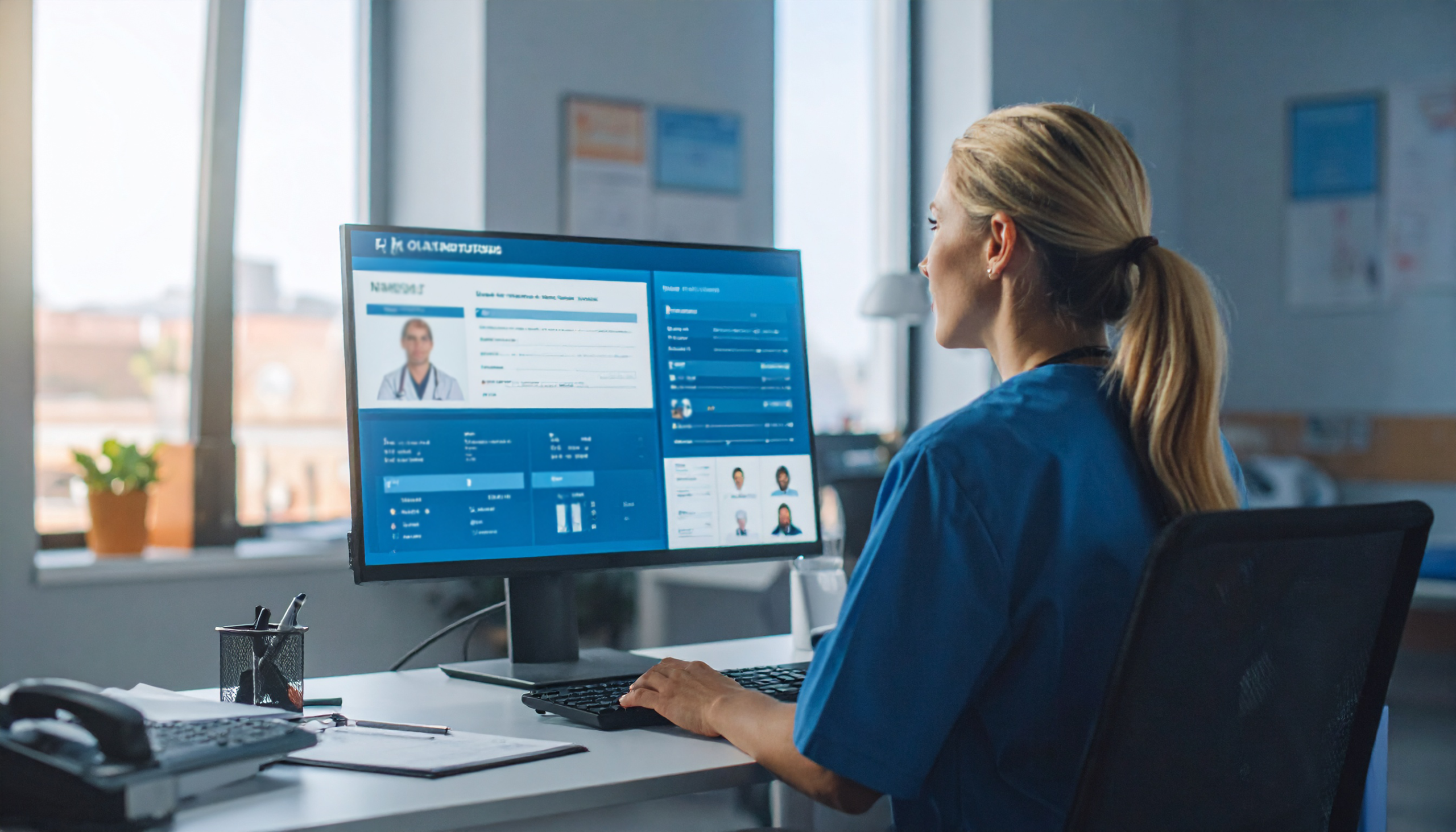
Credential verification and compliance screening are traditionally manual tasks. AI-powered systems automate this step by filtering candidates before they reach a recruiter.
The platform automatically verifies:
- Active licenses
- Required certifications
- Geographic eligibility
- Work authorization
- Credential expiration dates
This removes hours of administrative work and accelerates candidate readiness.
5. Behavioral Engagement Nudges
AI systems also maintain ongoing communication with clinicians through automated engagement prompts.
Examples include:
“Three ICU roles match your skills. Review opportunities now.”
These behavioral nudges keep clinicians engaged without requiring constant recruiter outreach.
Case Study: Faster Hiring at Memorial Hermann Houston
One large health system tested AI-enabled recruiting during a high-volume staffing initiative.
Results included:
- 40% reduction in overall time-to-fill
- 50 travel nurse contracts filled in six weeks
- Previous projection for the same hiring volume: 22 weeks
Faster hiring cycles allowed units to maintain staffing levels without escalating agency dependency.
Why Speed Matters During Emergency Surges
Rapid staffing response becomes even more critical during unexpected demand spikes. During events such as pandemic surges or sudden patient volume increases, traditional agency pipelines require four to six weeks to ramp up candidate supply.
AI-driven platforms can instead activate dormant candidate networks in as little as 72 hours by re-engaging previously qualified clinicians. This capability enables healthcare systems to respond to crises without relying solely on external agencies.
From Reactive Recruiting to Intelligent Hiring
The healthcare hiring landscape is shifting from manual recruiting processes to intelligent talent infrastructure.
AI-powered platforms allow organizations to:
- Identify qualified clinicians instantly
- Reduce administrative delays
- Improve match quality through skills-based hiring
- Engage passive candidates automatically
For hospitals facing persistent staffing shortages, improving time-to-fill may be the fastest way to stabilize workforce operations.
Assess Your Hiring Speed
Many healthcare systems don’t realize how much time disappears between requisition approval and start date.
A Speed-to-Hire Audit can help analyze your current hiring workflow and identify where AI-powered automation could significantly reduce delays.
The assessment reviews:
- Requisition-to-candidate timelines
- Interview and offer bottlenecks
- Credentialing workflow efficiency
- Opportunities for automated nurse matching
Understanding where time is lost is the first step toward building a faster, more resilient clinical hiring strategy.