
For many healthcare organizations, the biggest barrier to changing staffing models isn’t cost or speed. It’s compliance. HR and legal teams often raise the same concern that If we move away from agencies and start direct-sourcing clinicians, do we increase co-employment risk? It’s a valid question and one that has kept many hospitals locked into expensive, vendor-driven models.
But here’s the reality:
Direct sourcing does not create compliance risk, but outdated structures and unclear ownership do.
Why Compliance Feels Like a Barrier
Traditional agency and MSP models positioned themselves as the safe option.
They promised:
- Managed credentialing
- Risk mitigation
- Regulatory oversight
In return, hospitals gave up:
- Talent ownership
- Cost control
- Transparency
Over time, this created a belief that compliance only exists inside agency-driven models. That belief is now outdated.
The Real Risk: Misunderstanding Co-Employment
Let’s clarify what actually creates co-employment risk in healthcare staffing.
Risk occurs when:
- Worker classification is unclear
- Payroll and tax responsibilities are mismanaged
- Supervision and employment control are not properly structured
It is not caused by:
- Direct engagement with clinicians
- Owning your talent pipeline
- Running your own hiring workflows
In other words, the risk isn’t direct sourcing. It’s how employment responsibilities are handled behind the scenes.
The Shift: Compliance Without Dependency
Modern healthcare organizations are solving this with a different model:
Direct sourcing + Employer of Record (EOR) infrastructure
This approach allows hospitals to:
- Engage clinicians directly
- Control their workforce pipeline
- Maintain full compliance without internal burden
The result is a model where control and compliance coexist.
How EOR Eliminates Co-Employment Risk
An EOR (Employer of Record) acts as the legal employer for contingent clinicians.
This means:
- The EOR handles payroll, taxes, and benefits
- Worker classification is managed correctly
- Employment liability stays with the EOR
- Hospitals maintain operational control without legal exposure
From a compliance standpoint, this is identical or often superior to agency models. The difference is that you remove the middle layers of cost without removing protection.
Built-In Compliance: What Actually Happens Behind the Scenes
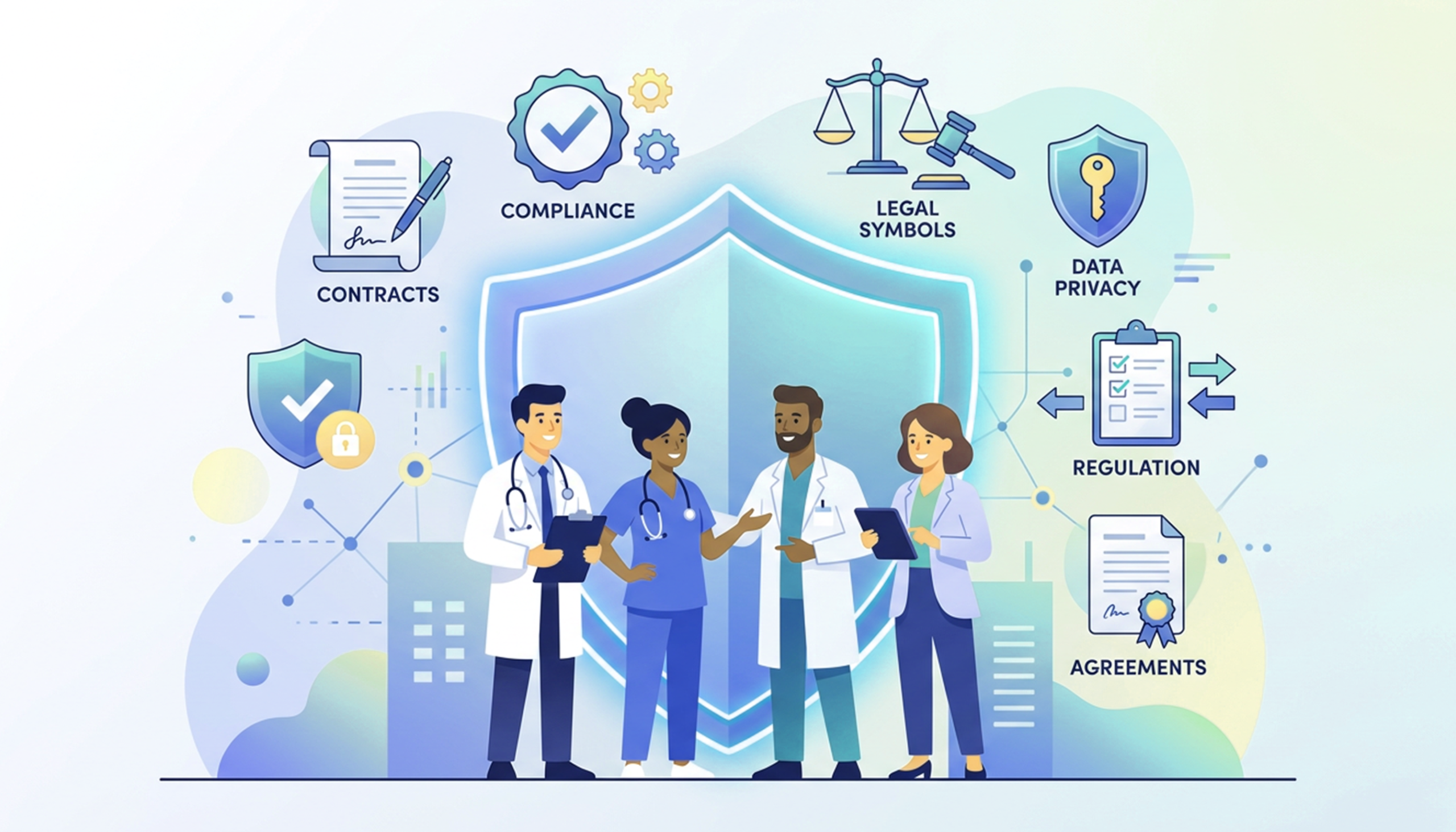
In a modern contingent talent marketplace, healthcare staffing compliance is not an afterthought — it’s embedded into the workflow.
1. Credentialing Automation
- License verification
- Certification checks
- Immunization and background validation
- Continuous monitoring for expirations
This reduces manual errors and ensures every clinician meets regulatory requirements before onboarding.
2. Standardized Compliance Workflows
- Structured onboarding processes
- Audit-ready documentation
- Consistent screening protocols across all hires
No variation, no gaps, just repeatable compliance.
3. Worker Classification & Payroll Management
- EOR ensures proper classification (W2 vs. contractor where applicable)
- Payroll, tax filings, and benefits handled externally
- Reduced legal exposure for the healthcare organization
4. Ongoing Compliance Monitoring
- Automated alerts for expiring credentials
- Continuous workforce validation
- Real-time reporting for audit readiness
Why This Model Is Actually Safer Than Agencies
It may feel counterintuitive, but direct sourcing with EOR support often reduces compliance risk compared to traditional models.
Here’s why:
Greater Visibility
You see exactly who is working, their credentials, and their compliance status.
Standardization
Processes are consistent, not dependent on multiple agencies with varying standards.
Fewer Intermediaries
Less complexity means fewer points of failure.
Clear Accountability
The EOR owns employment liability, eliminating ambiguity.
Compliance at Scale: Supporting Real Workforce Needs
As healthcare systems scale contingent staffing, compliance becomes even more critical.
Modern platforms support:
- Multi-state licensing verification
- Cross-facility workforce deployment
- Rapid onboarding during surge events
- Consistent compliance across departments and locations
This is especially important for:
- Seasonal demand spikes
- Travel and per diem staffing
- Multi-site health systems
Compliance doesn’t slow you down, it moves with you.
The Bigger Picture: Removing the Hidden Barrier
For many organizations, compliance concerns have delayed necessary change.
But once addressed, something shifts:
- HR teams gain confidence
- Legal teams remove objections
- Finance sees cost-saving opportunities
- Operations gain speed and flexibility
What was once a blocker becomes an enabler.
From Compliance Fear to Workforce Control
The idea that you must choose between compliance and control is a myth.
With the right model, you get both:
- Direct access to clinicians
- Full workforce ownership
- Built-in compliance infrastructure
- Zero co-employment risk
And most importantly:
You remove dependency without increasing risk.
Ready to Modernize Your Compliance Strategy?
If compliance concerns have been holding your organization back from adopting a more efficient staffing model, it’s time to take a closer look.