
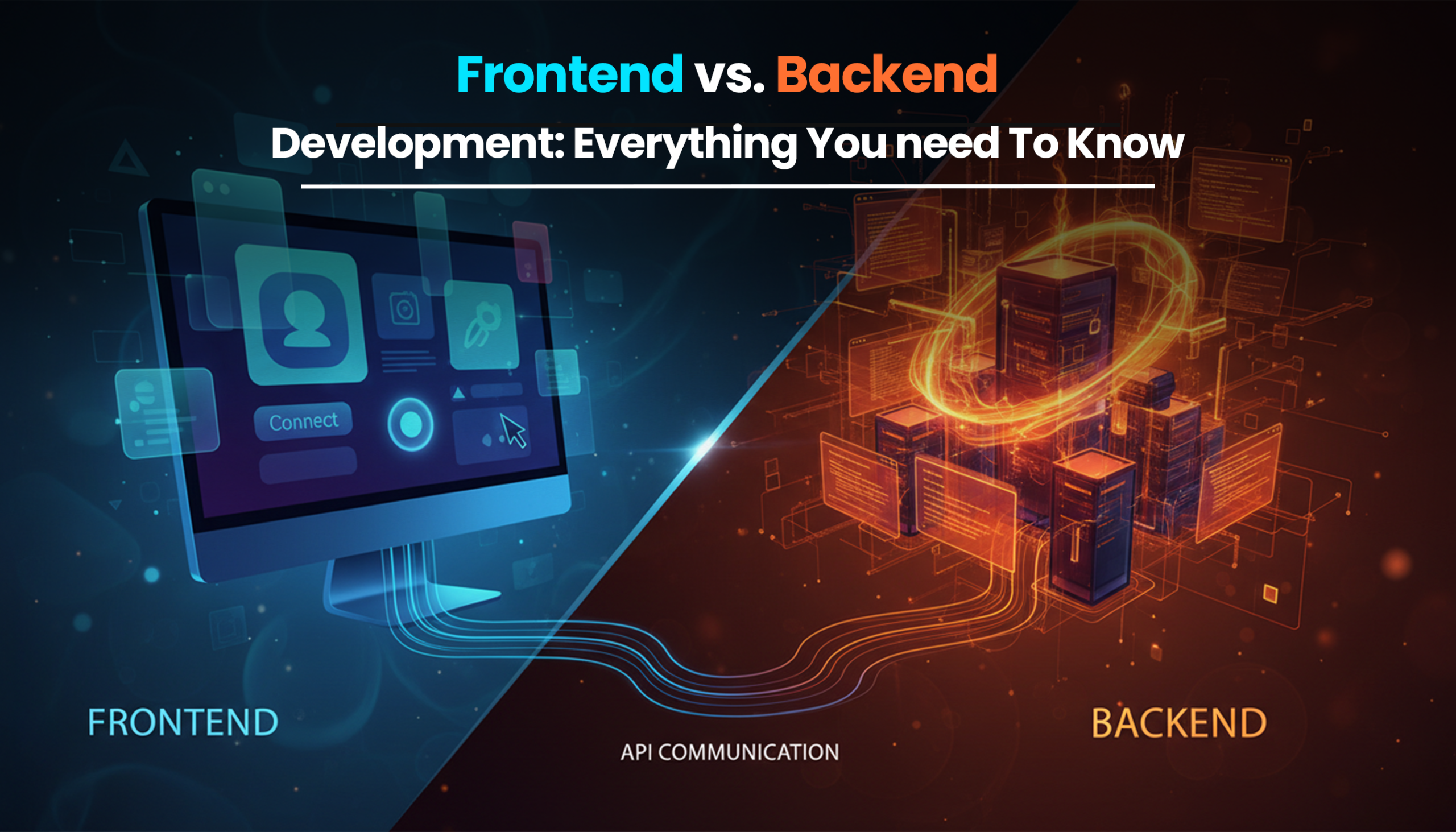
In modern software engineering, every application, whether a website, mobile app, or enterprise system, has two essential sides: the frontend and the backend. Understanding how these layers differ, how they work together, and which technologies power them is essential for developers, business leaders, and product managers alike. This guide explains frontend vs backend development in practical terms, highlights key skills and tools for each, and helps you decide which path to take if you’re planning a career or a project.
What Is Frontend Development?
Frontend development refers to the part of software that users see and interact with directly. It includes everything that appears in the browser or app screen, layouts, buttons, menus, animations, forms, and more. In simple terms, the frontend is the user experience layer of an application.
The goal of frontend development is to create interfaces that are:
- Intuitive and responsive
- Visually appealing
- Fast and accessible on different devices
Frontend developers use technologies like:
- HTML: The structure of web pages
- CSS: Styles, layouts, animations, and visual design
- JavaScript: Interactivity, dynamic updates, and UI logic
Modern frontend frameworks and libraries simplify complex UI tasks. Popular tools include:
- React.js — component-based UI library
- Vue.js — progressive framework
- Angular — full-featured frontend framework
These tools help developers build scalable interfaces, reuse UI components, and optimize performance for web and mobile experiences.
What Is Backend Development?
Backend development refers to everything that happens behind the scenes. Backend systems handle server logic, data storage, authentication, business rules, APIs, and integrations. The backend powers the application and communicates with the frontend to deliver the data users need.
Backend is responsible for:
- Processing requests from the frontend
- Managing databases and queries
- Implementing business logic
- Handling authentication and secure access
Common backend languages and environments include:
- Node.js (JavaScript)
- Python (Django, Flask)
- Java (Spring Boot)
- Ruby (Rails)
- PHP (Laravel)
Backend developers also work with database systems like:
- MySQL, PostgreSQL (relational databases)
- MongoDB, Cassandra (NoSQL databases)
And they use tools to build APIs (RESTful or GraphQL) that enable frontend apps, mobile apps, and third-party services to communicate securely and efficiently.
How Frontend and Backend Work Together
A user interacts with the frontend by clicking a button or filling out a form. The frontend then:
- Sends a request to the backend
- The backend processes the request (e.g., fetches data from the database)
- Sends a response back to the frontend
- The frontend updates the UI based on the response
For example, logging in:
- Frontend collects username and password
- Sends credentials to backend API
- Backend validates login and returns a session token
- Frontend stores the token and updates UI to show logged-in state
Clear communication between frontend and backend ensures the app behaves predictably, performs quickly, and handles errors gracefully.
Full Stack — The Best of Both Worlds
A full-stack developer works with both frontend and backend layers. They understand UI/UX design principles and server-side logic — making them versatile contributors capable of building complete applications from end to end.
Skills typically required for full stack include:
- Frontend frameworks (React, Vue.js)
- Backend languages (Node.js, Python)
- Database management
- API design
- Deployment and cloud basics
Full stack developers are valuable in startups, small teams, and agile environments where flexibility and speed matter.
Frontend Development: Key Skills
To excel in frontend development, professionals should know:
Responsive Design
Ensuring websites work well on all screen sizes, desktops, tablets, and phones.
JavaScript Mastery
Modern frontend logic relies heavily on JavaScript and its ecosystem.
Framework Expertise
React, Angular, or Vue.js for building scalable, maintainable UIs.
Version Control
Git workflows for collaborative development.
Performance Optimization
Minimizing load times and improving UI responsiveness.
Accessibility & UX Basics
Creating interfaces that are usable by all users, including those with disabilities.
Backend Development: Key Skills
Top backend developers need competencies like:
Database Design
Understanding data modeling and query optimization.
API Development
Designing secure, scalable APIs (REST or GraphQL).
Authentication & Security
Handling user sessions, encryption, and secure access controls.
Server Management
Deploying, scaling, and maintaining servers or cloud infrastructure.
Language Proficiency
Expertise in backend languages and frameworks.
Application Architecture
Building scalable, testable, and maintainable codebases.
Which Should You Learn First?
Your choice depends on your goals:
- Want to build user-facing features and visual design? Start with frontend.
- Interested in data processing, logic, and servers? Start with the backend.
- Want to support the entire application cycle? Consider full stack.
Many developers begin with the frontend to see immediate visual output, then expand into backend for deeper logic work.
What This Means for Businesses
Understanding frontend vs backend matters when:
- Hiring developers
- Defining project scope
- Estimating timelines and budgets
- Planning for maintenance and scalability
Clear separation of responsibilities ensures that teams deliver intuitive frontends backed by reliable, secure backend systems.
Conclusion
Both frontend and backend development are essential for building modern applications. Frontend focuses on delivering rich user experiences, while backend powers business logic, data, and security. Whether you pursue one specialization or both as a full stack developer, mastering the concepts that connect these layers is critical in today’s technology landscape.
Successful applications depend on fluent collaboration between these domains, with frontend and backend working in harmony to deliver performant, secure, and user-friendly solutions.